2026 Top Steel Storage Pallet Types for Global Buyers

Time:2026-10-07 Author:Oliver
0%

Global buyers entering 2026 need storage equipment that performs beyond product catalogs and polished photographs. A Steel Storage Pallet supports heavy loads, organized handling, and repeated movement in warehouses, factories, and distribution centers. Yet the right design depends on cargo weight, pallet dimensions, stacking height, forklift access, and local operating conditions. A pallet for boxed components may differ greatly from one carrying steel coils, drums, or irregular machinery parts.

This guide examines the leading Steel Storage Pallet types for international purchasing decisions. It considers fixed-leg pallets, stackable pallets, nestable designs, removable-post models, mesh pallets, and custom heavy-duty structures. Each type offers practical advantages. Some save floor space. Others improve visibility or simplify loading. Weld quality, deck thickness, surface treatment, load capacity, and dimensional accuracy also deserve close inspection. Small gaps can affect stability.

Real warehouse experience shows that published load ratings need careful interpretation. Static, dynamic, and racking capacities are not interchangeable. A pallet may support a stated weight on a level floor but perform differently during forklift travel. That detail is easy to miss. Buyers should request drawings, material information, inspection records, and sample testing where possible. Supplier reputation matters, but documented evidence matters more. No universal design suits every market. Conditions vary. This article therefore compares performance, maintenance, shipping efficiency, and purchasing risks, while recognizing that even a well-researched choice may need adjustment after real-world use.
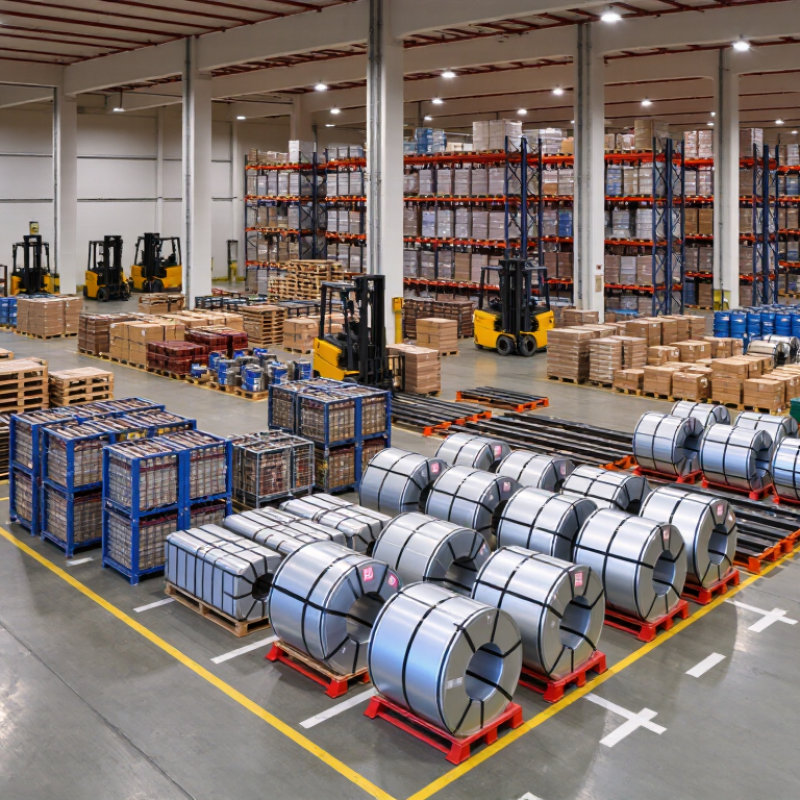
2026 Top Steel Storage Pallet Types for Global Buyers

Steel Storage Pallets: Definition, Structure, and Core Functions

Steel Storage Pallets: Definition, Structure, and Core Functions

A steel storage pallet is a reusable load platform made from welded or pressed steel. It supports cartons, drums, bins, and bulk containers during storage or internal movement. Common parts include deck panels, support legs, runners, corner posts, and forklift entry openings. Welded joints provide rigidity, while formed edges reduce sharp contact points. That matters.

The World Steel Association reported approximately 1.88 billion tonnes of crude steel production worldwide in 2024. This scale supports stable material availability for industrial pallet manufacturing. Steel pallets also handle repeated loading, higher temperatures, and demanding warehouse traffic. Their open structure improves fork access and allows visual inspection beneath the load. Many designs are stackable, saving floor space when empty or loaded.

MHI’s 2024 Annual Industry Report, based on responses from over 2,000 supply-chain professionals, identified resilience and automation as major investment priorities. Steel pallets support both goals when dimensions match racks, conveyors, and handling equipment. However, heavier tare weight can increase transport and labor costs. That weakness is easy to overlook. Buyers should verify static, dynamic, and racking capacities through documented testing, not marketing estimates. They should also inspect weld quality, deck deflection, corrosion protection, and repair procedures. A universal pallet rarely exists. Regional rack standards, climate, and load geometry can change the correct specification.

The Main Steel Storage Pallet Types Available in 2026

Steel storage pallets in 2026 serve different warehouse conditions, load patterns, and handling methods. The main types include wire mesh pallets, solid-deck pallets, stackable pallets, rackable pallets, and nesting pallets. Each design solves a different storage problem.

Wire mesh pallets provide visibility and airflow. They suit warehouses storing packaged goods, components, or temperature-sensitive materials. Operators can inspect labels through the mesh without moving the pallet.

Solid-deck pallets offer stronger support for small cartons, drums, and uneven loads. Their flat surface also reduces package damage. However, they may collect dust and moisture more easily.

Stackable steel pallets use reinforced feet or corner posts to create stable vertical storage. Rackable models support placement in selective pallet racking when their beams and load ratings match. Nesting pallets save floor space when empty, because their frames fit inside one another. This matters during seasonal demand changes and return transport.

In practical warehouse audits, checking the actual load center is essential. A pallet rated for 1,000 kilograms may perform poorly when weight sits near one edge.

Static, dynamic, and racking capacities should never be treated as identical.

Custom options can include removable gates, fork-entry changes, galvanized finishes, or reinforced bases. These features improve handling, but they also increase weight and cost.

No single pallet type fits every operation. A careful buyer should test samples, inspect weld quality, and review corrosion exposure before placing a large order. Small design details often decide whether daily handling feels safe or frustrating.

How to Compare Pallet Capacity, Dimensions, and Handling Features

2026 Top Steel Storage Pallet Types for Global Buyers

Comparing steel storage pallets starts with capacity, not appearance.

Ask for separate static, dynamic, and racking load ratings.

Static capacity describes a pallet resting on the floor.

Dynamic capacity covers movement by forklift or pallet jack.

Racking capacity applies when the pallet sits on beams.

These figures can differ sharply. A pallet rated for 2,000 kilograms on the floor may support far less in storage racks.

Request test conditions, load distribution, and safety factors.

Numbers without conditions are incomplete.

Dimensions must match the warehouse system.

Common footprints may suit one region but waste space in another. Measure rack beam spacing, aisle width, door clearance, and container limits.

Check the actual deck size, not only the nominal size. A few extra millimeters can affect stacking stability.

Consider welded steel pallets for heavy, repeated use, mesh-deck types for visibility, and nestable designs for empty-pallet storage.

Collapsible frames can reduce return volume, although hinges may need more inspection.

Handling features often decide daily productivity.

Four-way fork entry supports more approach angles.

Reinforced fork pockets reduce impact damage.

Raised feet improve stacking, while anti-slip surfaces help stabilize cartons.

Test pallet-jack access with a loaded unit. It may fit on paper, yet fail on uneven floors.

I have seen buyers focus on maximum capacity and overlook center-of-gravity marks.

That mistake is costly.

A practical trial with the heaviest intended load remains more reliable than a catalog promise.

Perfect specifications rarely exist. Recheck assumptions.

Choosing Steel Pallets for Different Warehousing Environments

2026 Top Steel Storage Pallet Types for Global Buyers

Choosing Steel Pallets for Different Warehousing Environments

Steel pallets suit warehouses where loads are heavy, repeated, or exposed to heat and moisture. The World Steel Association’s 2024 statistics show global crude steel production remained above 1.8 billion tonnes. This scale supports stable material availability, but pallet quality still varies. Buyers should check weld consistency, deck thickness, corrosion protection, and tested working load.

Selective racking needs rigid, rackable steel pallets with reinforced supports. Automated warehouses usually need tight dimensional tolerances and smooth entry points for conveyors. Cold rooms benefit from galvanized or coated surfaces, especially near condensation. Open yards require drainage openings and stronger corrosion resistance. Nestable models save space during empty returns, while stackable models suit dense floor storage. ISO 8611 testing helps verify pallet performance under different load conditions. Still, a laboratory rating may not match daily impacts from forklifts.

Tips: Measure rack beams, aisle width, and fork spacing before ordering. Ask for static, dynamic, and racking-load test results. Record pallet weight too. It affects handling costs. A 2024 MHI industry report identifies labor availability and warehouse efficiency as continuing priorities, so consistent pallet dimensions matter more in semi-automated sites. I have seen buyers focus only on maximum load. That choice can be wrong. Uneven loads, damaged floors, and repeated drops often determine real service life. Start with the harshest operating condition, not the showroom sample.

2026 Top Steel Storage Pallet Types for Global Buyers - Choosing Steel Pallets for Different Warehousing Environments

Steel Pallet Type Typical External Size Typical Static Load Typical Racking Load Typical Tare Weight Recommended Warehousing Environment Main Advantages Key Selection Considerations
3-Runner Steel Pallet 1,200 × 1,000 mm
47.2 × 39.4 in
2,000–3,000 kg
4,409–6,614 lb
800–1,500 kg
1,764–3,307 lb
25–38 kg
55–84 lb
General manufacturing, metalworking, automotive parts and export storage Good strength-to-weight ratio; compatible with forklifts and pallet trucks; economical for repetitive handling Confirm that the bottom runners are supported correctly on rack beams and conveyors
Perimeter-Basis Steel Pallet 1,200 × 800 mm
47.2 × 31.5 in
2,000–3,000 kg
4,409–6,614 lb
800–1,500 kg
1,764–3,307 lb
28–42 kg
62–93 lb
European-style distribution centers, retail logistics and automated storage areas Improved edge support; stable on conveyors; suitable for four-way forklift entry when designed accordingly Check pallet entry openings, conveyor roller spacing and compatibility with automated equipment
Nestable Steel Pallet 1,200 × 1,000 mm
47.2 × 39.4 in
1,500–2,500 kg
3,307–5,512 lb
Usually not intended for unsupported beam racking 18–30 kg
40–66 lb
Empty-pallet storage, returnable transport, food distribution and space-limited warehouses Nested empty pallets reduce storage volume; lower freight and return costs; easy to handle Use rackable supports or reinforced models if beam-rack storage is required
Heavy-Duty Reinforced Steel Pallet 1,200 × 1,000 mm
47.2 × 39.4 in
3,000–5,000 kg
6,614–11,023 lb
1,500–2,500 kg
3,307–5,512 lb
40–65 kg
88–143 lb
Steel service centers, machinery storage, automotive production and heavy industrial goods High load capacity; strong resistance to impact and repeated forklift handling; long service life Requires suitable rack beam spacing, floor capacity and lifting equipment
Hygienic Stainless-Steel Pallet 1,200 × 800 mm
47.2 × 31.5 in
1,000–2,000 kg
2,205–4,409 lb
500–1,000 kg
1,102–2,205 lb
30–48 kg
66–106 lb
Food processing, pharmaceutical production, cleanrooms and wash-down areas Excellent corrosion resistance; smooth surfaces support cleaning and sanitation; low contamination risk Higher purchase cost; specify the stainless-steel grade and surface finish according to chemicals and hygiene rules
Galvanized Steel Pallet 1,200 × 1,000 mm
47.2 × 39.4 in
1,500–3,000 kg
3,307–6,614 lb
700–1,500 kg
1,543–3,307 lb
28–45 kg
62–99 lb
Cold storage, humid warehouses, outdoor covered storage and chemical-adjacent areas Zinc coating provides additional corrosion protection; suitable for damp handling conditions Inspect coating damage after impact; aggressive acids, alkalis or salt exposure may require stainless steel
Closed-Deck Steel Pallet 1,200 × 1,000 mm
47.2 × 39.4 in
2,000–3,000 kg
4,409–6,614 lb
800–1,500 kg
1,764–3,307 lb
35–55 kg
77–121 lb
Small-part storage, bagged materials, clean logistics and operations requiring a continuous deck Prevents small packages from falling through openings; easier to clean than open mesh decks Heavier than open-deck designs; verify drainage requirements for wet or wash-down environments
Wire-Mesh Steel Pallet 1,200 × 1,000 mm
47.2 × 39.4 in
1,500–2,500 kg
3,307–5,512 lb
700–1,200 kg
1,543–2,646 lb
30–45 kg
66–99 lb
Automotive components, spare parts, order picking and inventory systems requiring visibility Good product visibility and ventilation; foldable versions can reduce return-storage volume Mesh aperture must match the smallest stored item; inspect welds and hinges in foldable designs
Export-Focused Steel Pallet 1,200 × 1,000 mm
47.2 × 39.4 in
1,500–2,500 kg
3,307–5,512 lb
700–1,200 kg
1,543–2,646 lb
22–35 kg
49–77 lb
International shipping, reusable export packaging and multi-country distribution networks Durable and reusable; avoids wood-pallet pest concerns; suitable for repeated container loading Confirm destination-country import rules, container utilization and corrosion protection for sea freight
Spill-Containment Steel Pallet 1,200 × 1,200 mm
47.2 × 47.2 in
1,500–3,000 kg
3,307–6,614 lb
700–1,500 kg
1,543–3,307 lb
55–90 kg
121–198 lb
Lubricants, paints, chemicals, maintenance stores and regulated liquid-material areas Raised platform with sump area helps contain leaks; protects floors and improves handling safety Containment capacity, drain design, chemical compatibility and local safety requirements must be verified

Load figures are typical design ranges for guidance only. Actual capacity depends on steel grade, deck structure, support spacing, load distribution, forklift handling, rack configuration and applicable local safety standards. Always obtain a tested load rating for the final pallet and storage system.

How Global Buyers Can Source and Verify Steel Storage Pallets

For global buyers, steel storage pallets should match the warehouse, not only the catalog. Stackable pallets suit high-bay storage and repeated handling. Rackable pallets need reinforced supports beneath the deck. Nestable models save return-shipping space when empty. I have found that small dimensional errors can cause major rack problems. A pallet that fits one warehouse may fail in another.

Tips: Send suppliers a drawing with length, width, entry direction, and load requirements. Ask whether the rated load is static, dynamic, or racking-based. Request steel grade, surface-treatment details, weld specifications, and inspection records. A sample pallet is worth more than attractive product photos. Check fork-entry clearance, deck flatness, corner welds, and support alignment. Measure everything.

Verification should continue after the sample passes. Review production tolerances and confirm whether the supplier uses calibrated testing equipment. For larger orders, inspect a random batch before shipment. Look for bent frames, uneven coating, sharp edges, and incomplete weld penetration. Salt-spray data can help evaluate corrosion protection, but it does not replace real warehouse testing. Third-party inspection adds confidence, though it may increase cost and time. That trade-off is often reasonable. Steel pallets are durable, but “heavy-duty” is not a technical standard. Buyers should record test conditions and acceptance limits in the purchase agreement. I would also recheck actual loads after installation, because planning assumptions are sometimes wrong.

2026 Top Steel Storage Pallet Types for Global Buyers

How Global Buyers Can Source and Verify Steel Storage Pallets

The chart compares representative nominal static and dynamic load capacities commonly specified for industrial steel storage pallets. Actual performance depends on pallet dimensions, steel thickness, weld quality, support spacing, load distribution, and storage conditions. Global buyers should verify the supplier’s drawings, material certificate, weld inspection records, load test report, surface-treatment specification, and compliance with the required racking system before placing an order.

FAQS

What are the main steel storage pallet types available in 2026?

Common types include wire mesh, solid-deck, stackable, rackable, and nesting pallets. Each suits different warehouse conditions.

Which pallet type provides better visibility and airflow?

Wire mesh pallets allow operators to see labels without moving stored goods. They also improve airflow around packaged items.

When is a solid-deck pallet the better choice?

Solid decks support small cartons, drums, and uneven loads. Their flat surface can reduce package damage. Dust and moisture may collect underneath.

Can a pallet’s stated capacity be trusted in every situation?

No. Static, dynamic, and racking capacities are different measurements. A 1,000-kilogram rating may fail when weight sits near one edge.

How should buyers check pallet dimensions?

Measure rack spacing, aisle width, door clearance, and container limits. Check the actual deck size, not just the listed dimensions.

Which handling features can improve daily warehouse work?

Four-way fork entry allows more approach angles. Reinforced pockets resist impact. Raised feet support stacking, while anti-slip surfaces stabilize cartons.

How can buyers verify pallet quality before a large order?

Request a sample and inspect welds, coating, flatness, fork clearance, and support alignment. Product photos are not enough.

What should buyers check for corrosion protection?

Review the surface treatment and available salt-spray data. Inspect sharp edges, uneven coating, and exposed steel. Testing should continue after installation.

Do nesting and collapsible pallets always reduce costs?

Nesting pallets save floor space during empty storage and return transport. Collapsible frames may reduce shipping volume, but hinges require extra inspection.

Are custom pallet features always worth adding?

Removable gates, changed fork entries, and reinforced bases can improve handling. They also add weight and cost. Perfect specifications rarely exist.

Conclusion

Steel Storage Pallets are durable load-supporting platforms designed for storing, organizing, and moving goods in demanding warehouse and industrial environments. Their steel frames, deck surfaces, and reinforced structures provide strength, stability, and long service life compared with many alternative pallet materials. In 2026, global buyers can choose from several types, including stackable, rackable, nestable, mesh-deck, closed-deck, and customized pallets. Each design offers different benefits for storage density, product protection, accessibility, and handling efficiency.

When comparing options, buyers should evaluate static, dynamic, and racking capacities, as well as dimensions, weight, entry points, forklift compatibility, surface treatment, and safety features. The best choice depends on the warehouse environment, such as selective racking, cold storage, automated facilities, outdoor areas, or high-humidity locations. For reliable sourcing, purchasers should confirm material specifications, manufacturing tolerances, load test results, corrosion resistance, packaging, and delivery requirements. Clear technical documentation and quality verification help global buyers select steel pallets that meet operational needs and applicable regional standards.

Oliver

Oliver

Oliver is a seasoned marketing professional with a wealth of expertise in driving brand awareness and engagement. With a deep understanding of our company's product offerings, he consistently delivers high-quality content that enriches our professional blog. His insights not only shed light on......