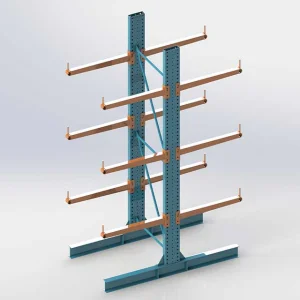
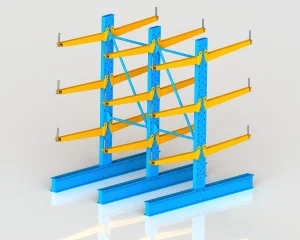
Cantilever Racking Manufacturers & Exporters

High-Density Industrial Storage Solutions for Oversized, Long, and Heavy-Duty Materials Built to Global Engineering Standards

Global Industrial Cantilever Racking Market Landscape

Analysis of international demand, structural engineering demands, and logistical efficiencies across sectors.

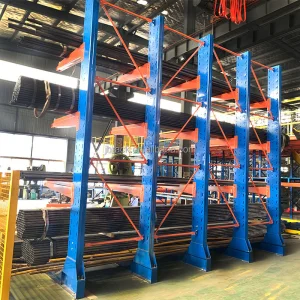
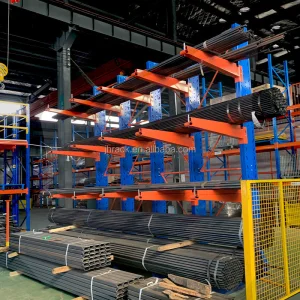
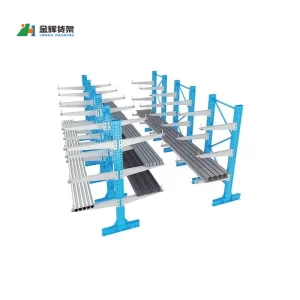
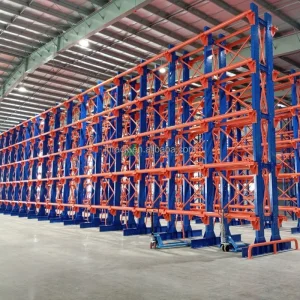
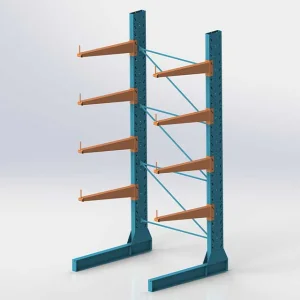
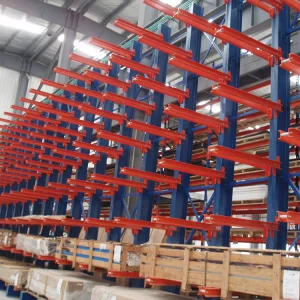
In modern industrial logistics, the management of non-standardized loads presents a distinct challenge. Standard pallet racking systems, while efficient for uniform cuboidal inventory, fail entirely when tasked with storing structural tubing, timber packs, drywall sheets, extrusions, and heavy metal coils. This gap is filled by cantilever racking systems, which feature an open-front configuration that eliminates the vertical front column barrier, allowing continuous horizontal placement of materials.

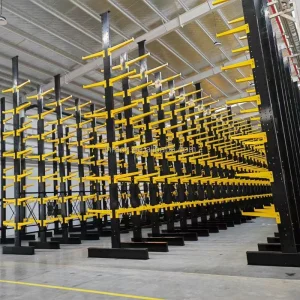
The global market for cantilever racking is experiencing rapid expansion, driven by the growth of infrastructure development, heavy manufacturing, and automated distribution hubs. Historically localized to construction supply yards, cantilever storage has transitioned into heavy industrial environments, steel distribution centers, and automotive recycling depots worldwide. Industrial operators in North America, Northern Europe, and Australia are increasingly replacing flat floor storage with high-density cantilever structures to minimize product damage and optimize footprint efficiency.

Steel Distribution & Metallurgy

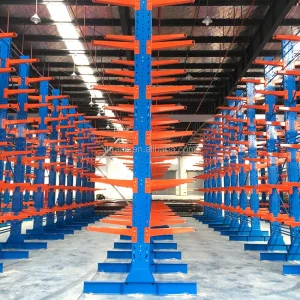
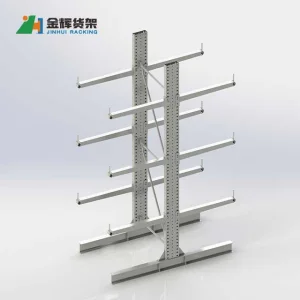
Enables safe storage of steel pipes, angles, channels, and heavy bars. Double-sided configurations optimize central bay areas in metal wholesale facilities.

Lumber & Building Materials

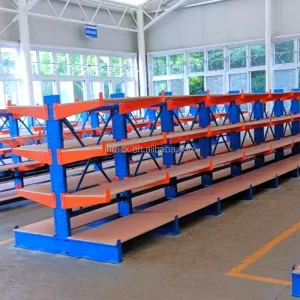
Preserves structural wood packs, plasterboard, and PVC extrusions from bowing or warp deformation under inconsistent floor pressure.

Industrial Cable & Reel Storage

Specially customized cantilever arms equipped with retention drop pins or axle supports facilitate horizontal reel storage and direct unreeling.

Advanced Manufacturing Showcase

An overview of our precision fabrication steps at Jinhui Storage Equipment Co., Ltd.
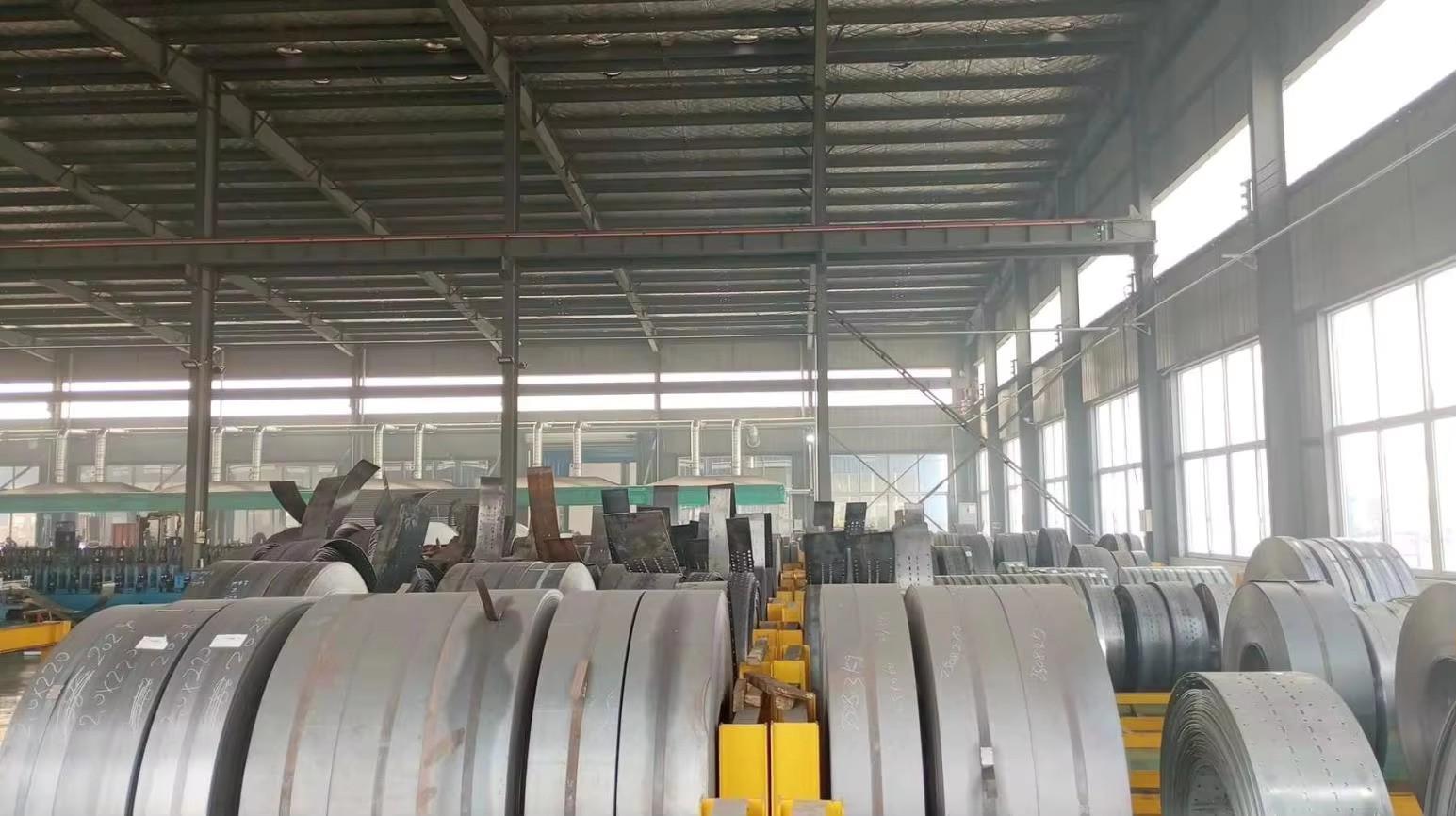
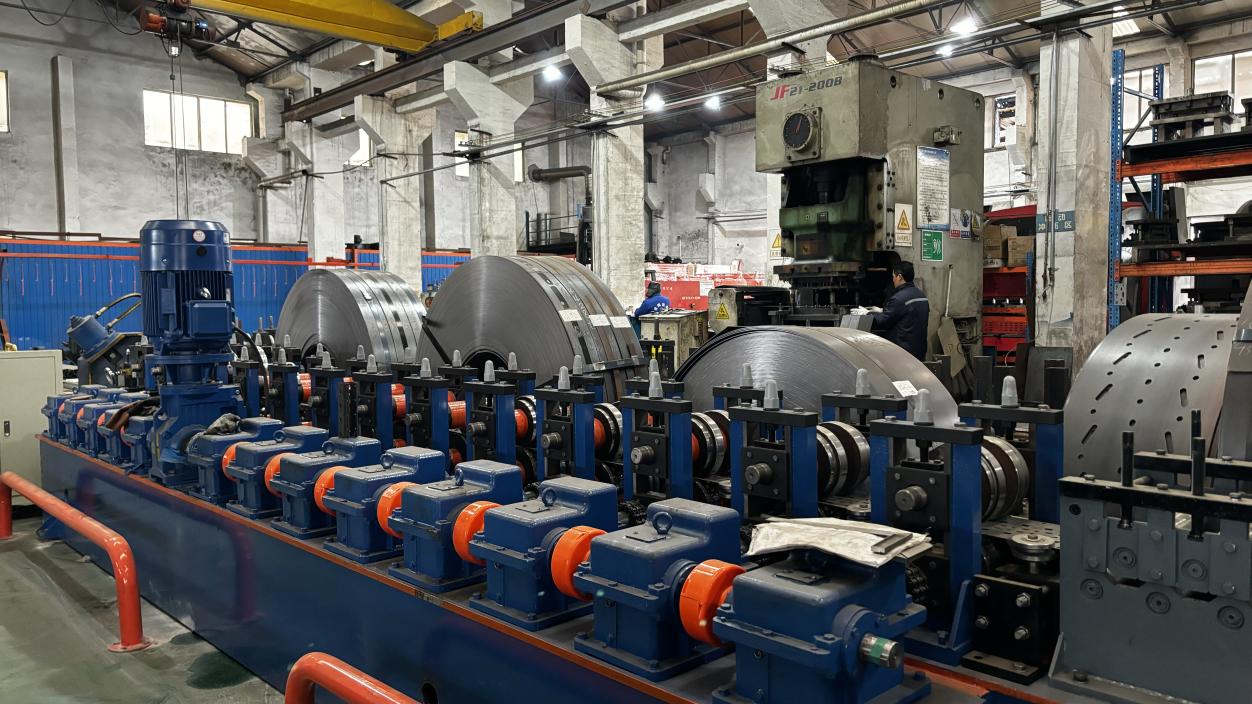
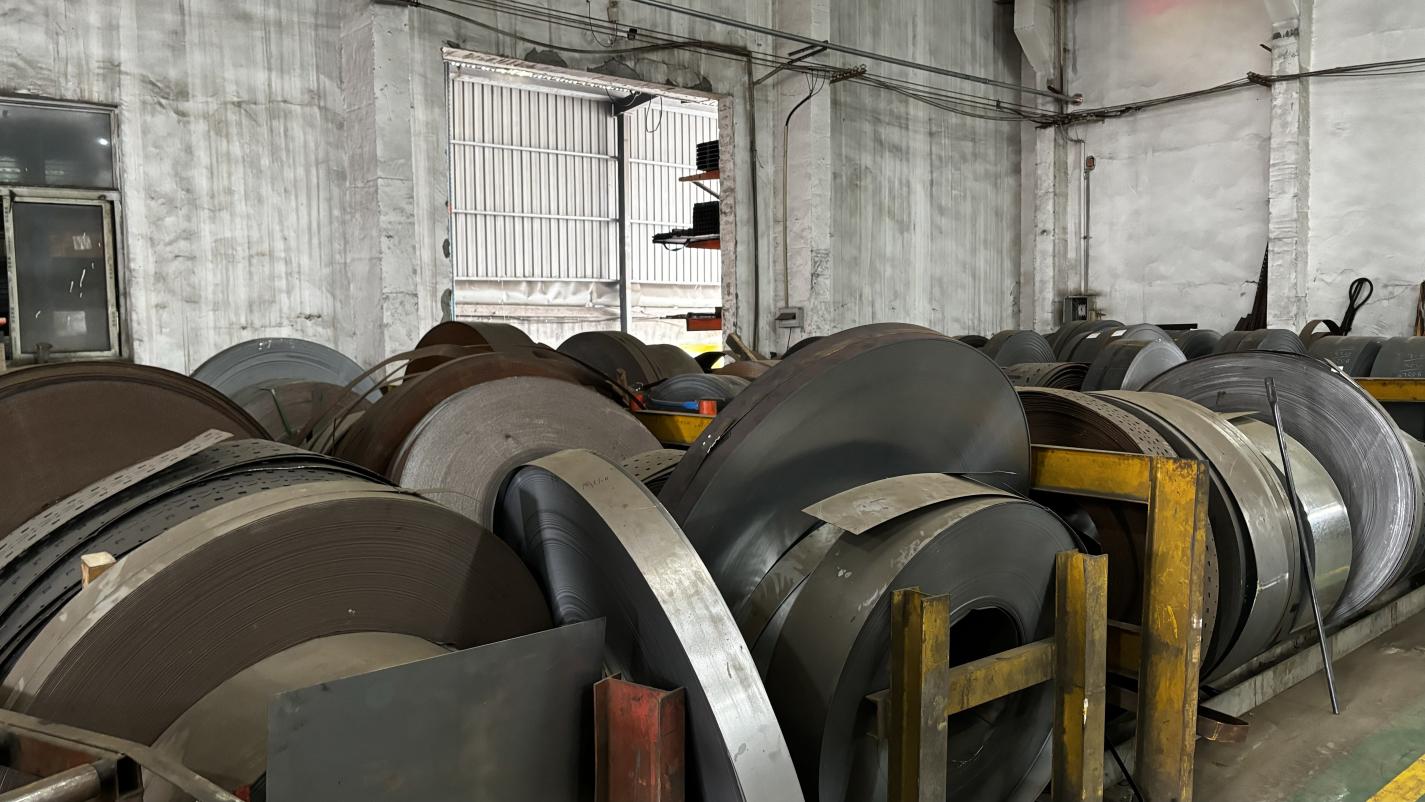
Raw Material
Raw Material
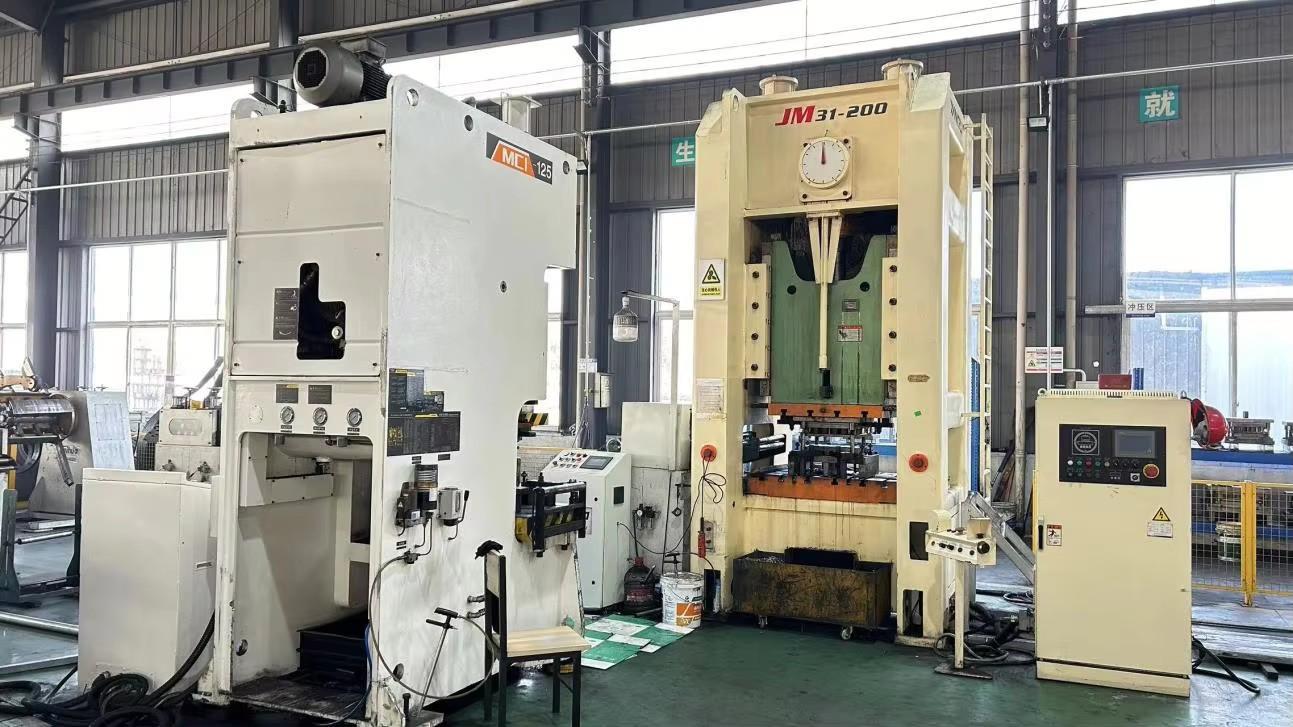
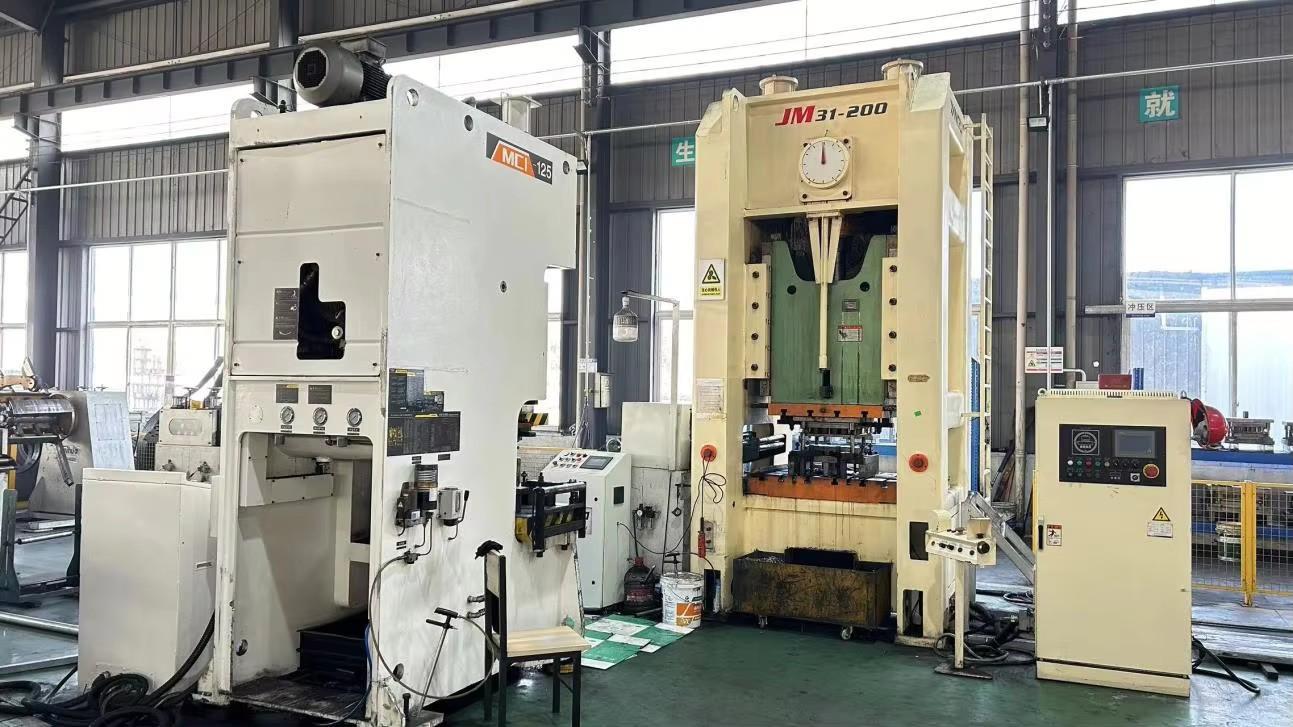
Pressing
Pressing
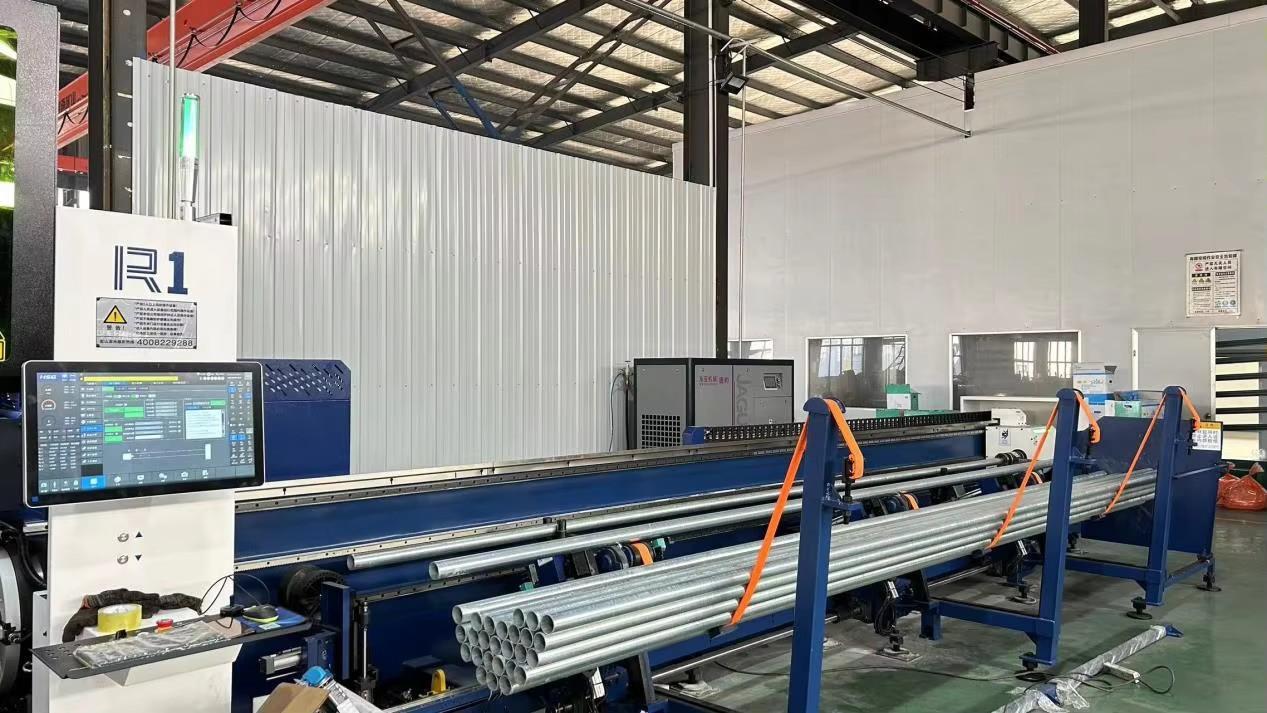
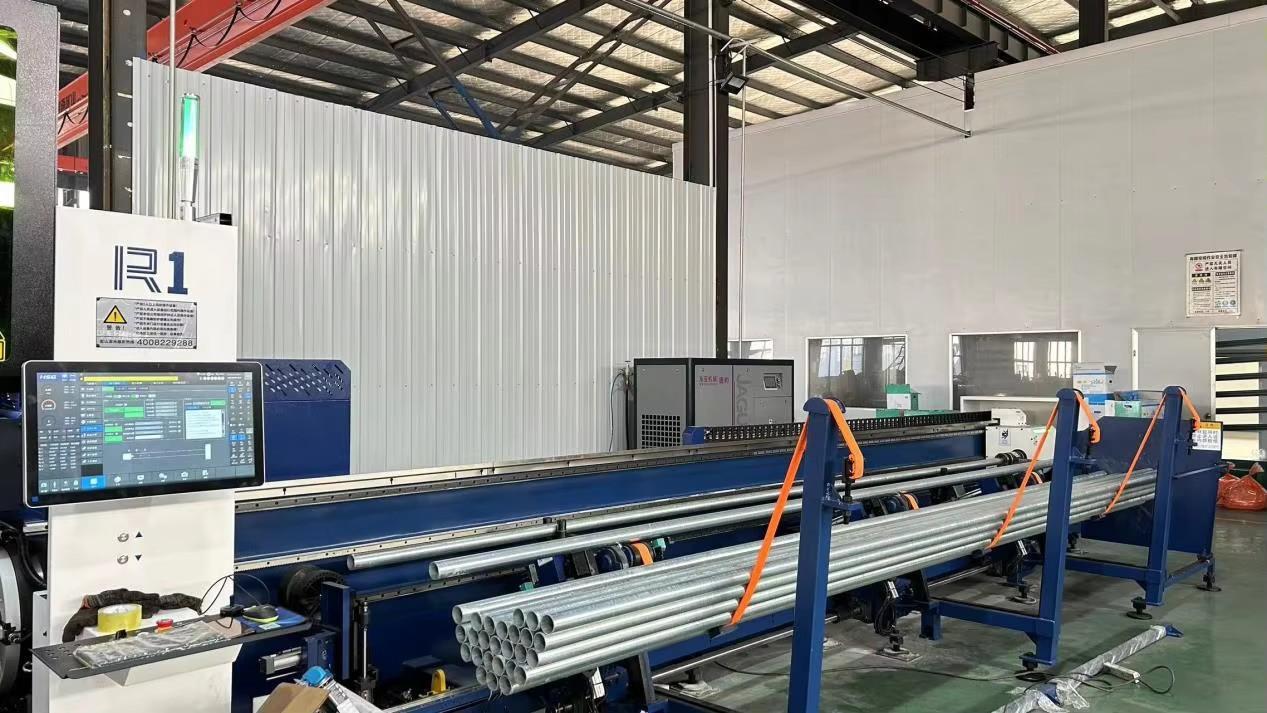
Cutting
Cutting
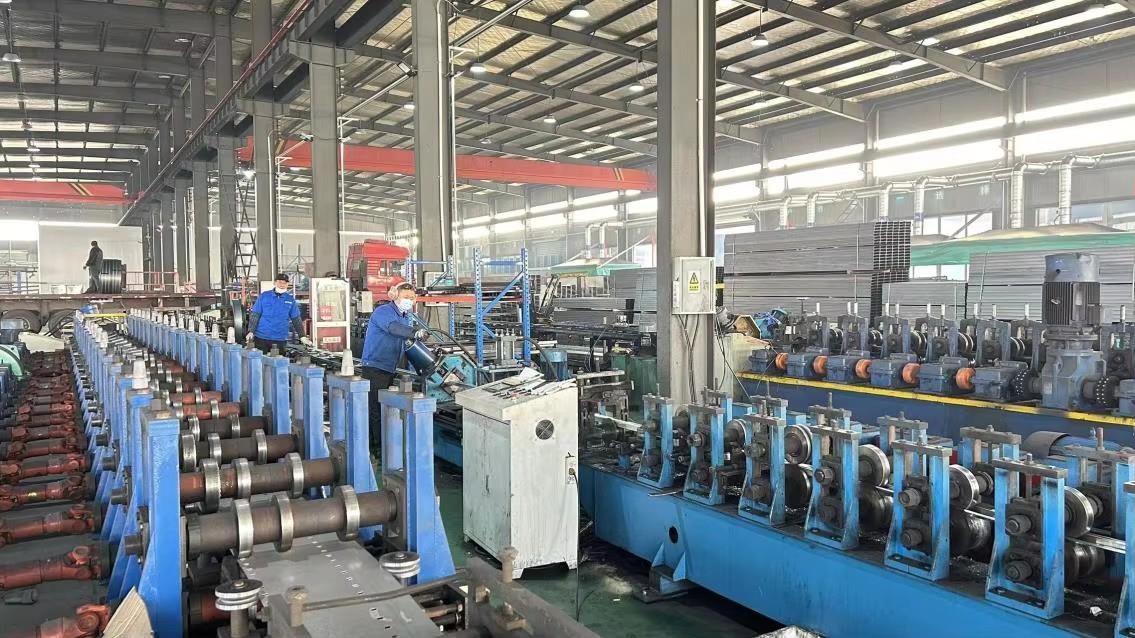
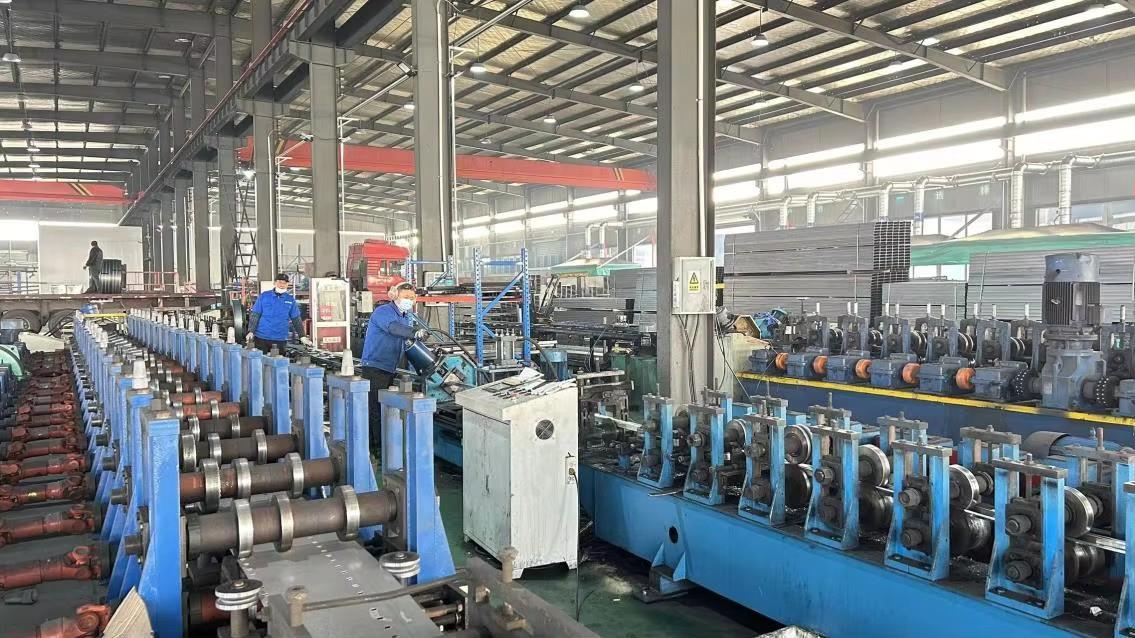
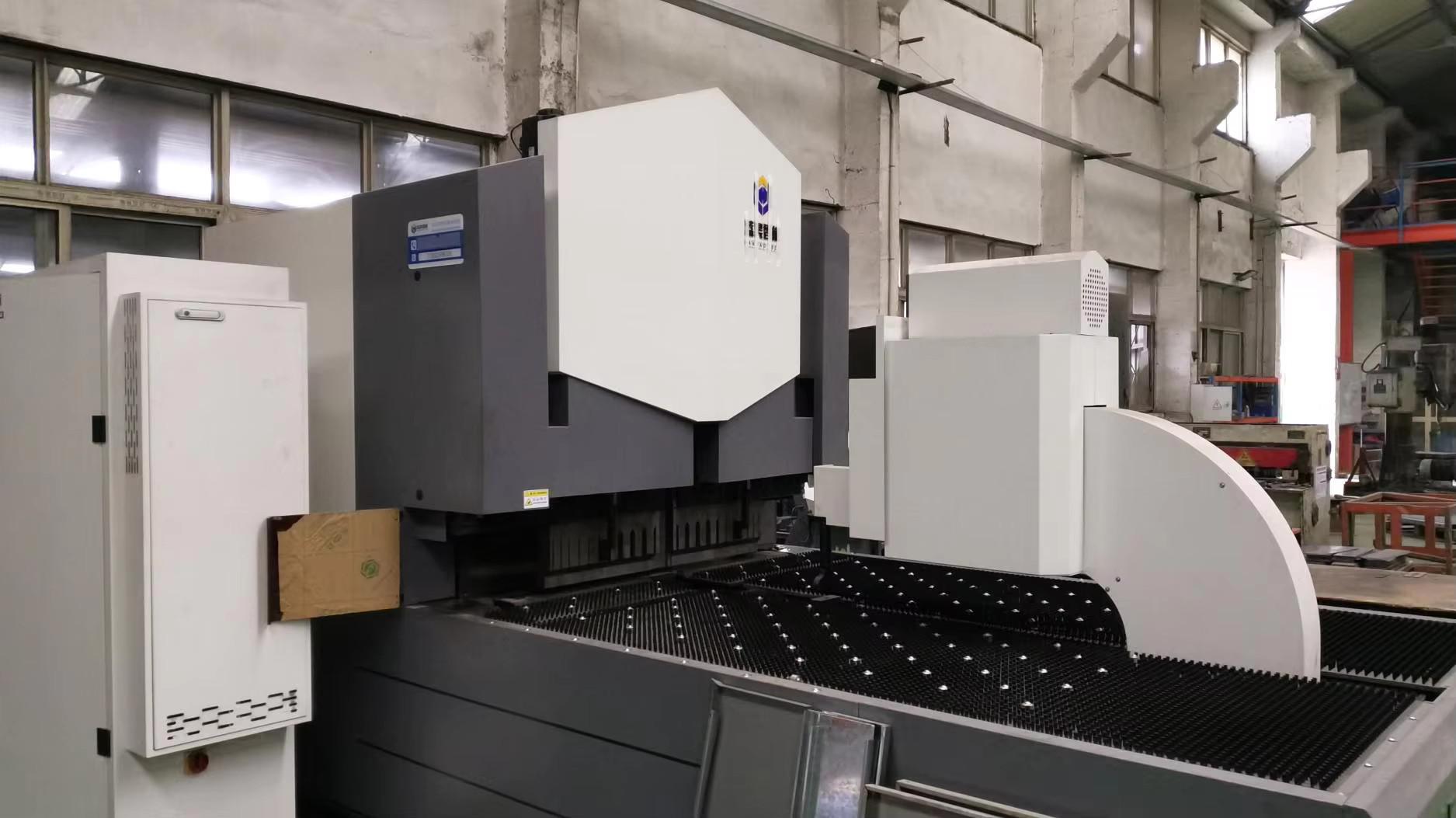
Bending and Forming
Bending and Forming
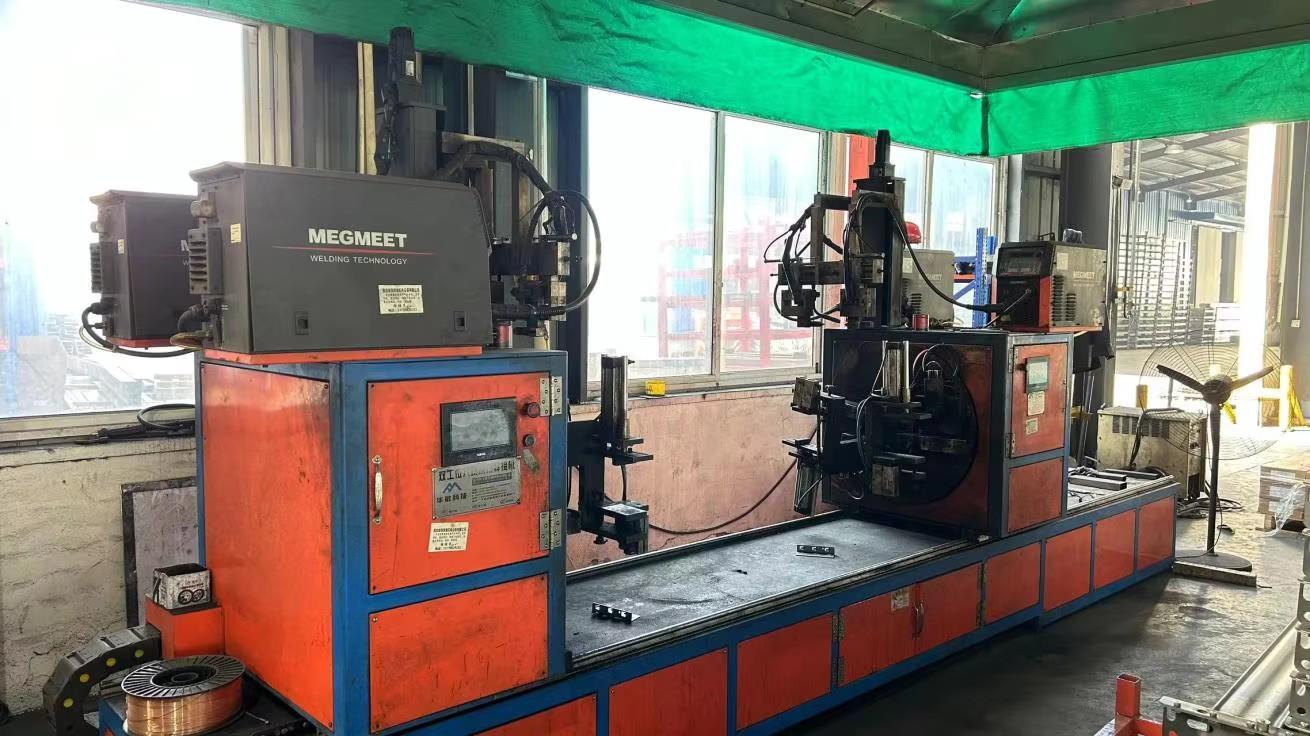
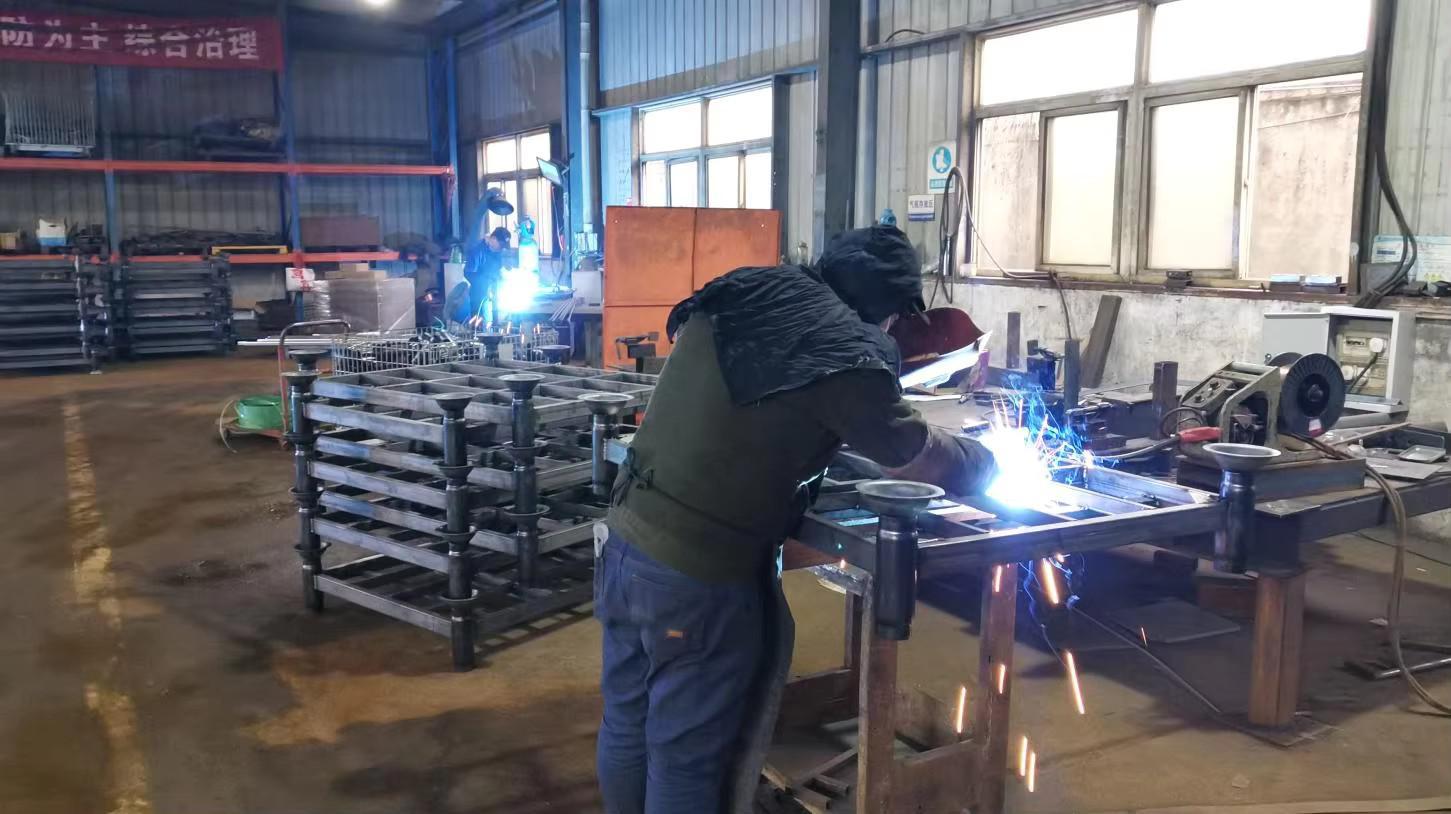
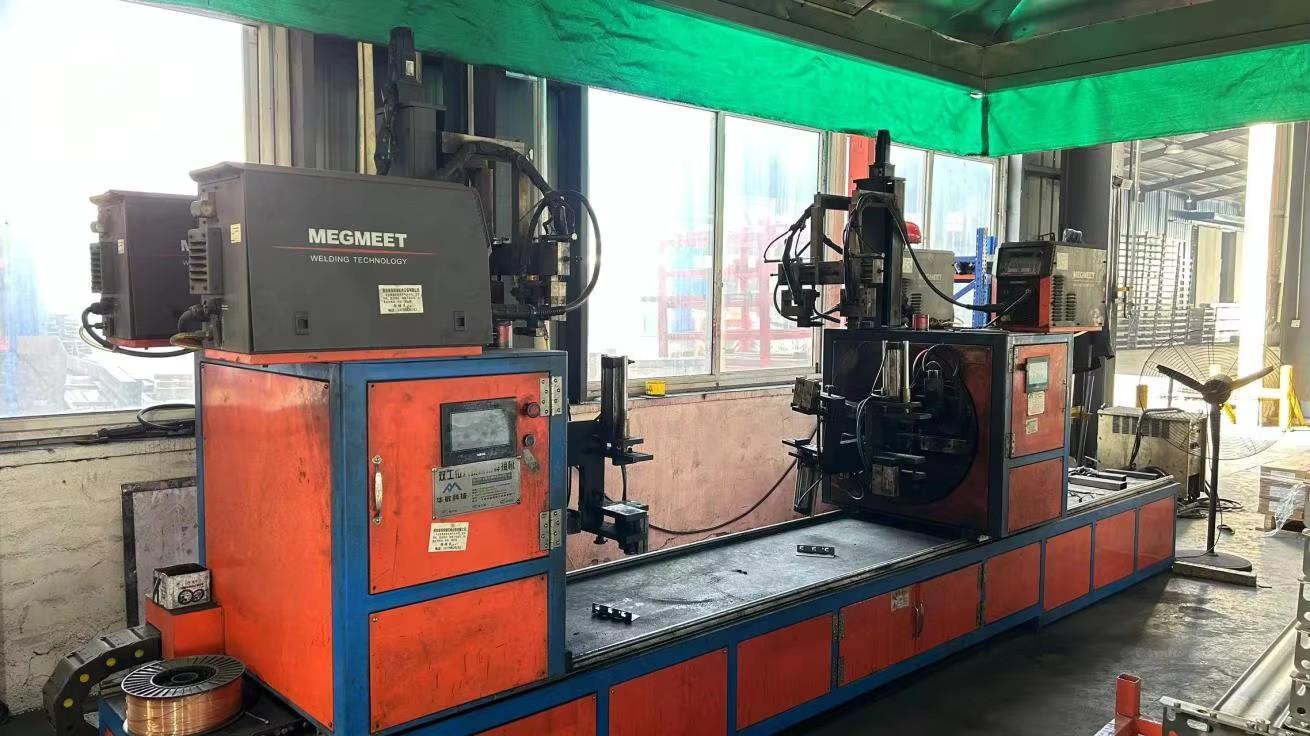
Automatic Welding Machine
Automatic Welding
Polishing Machine
Polishing Machine
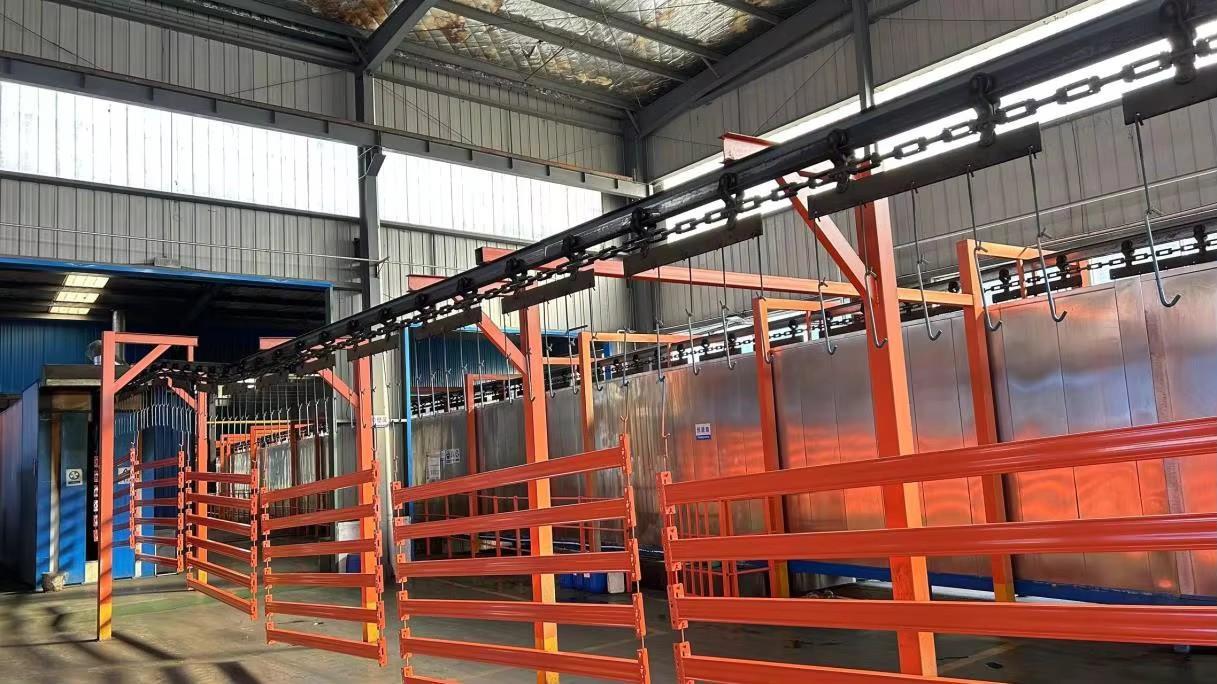
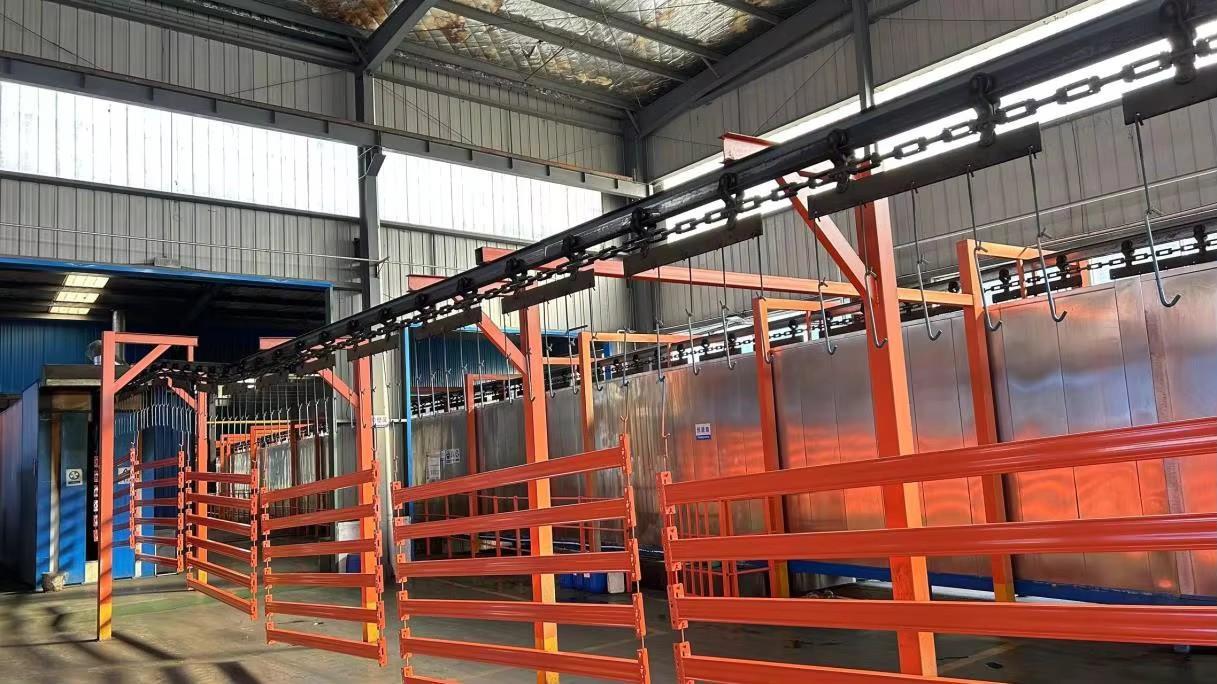
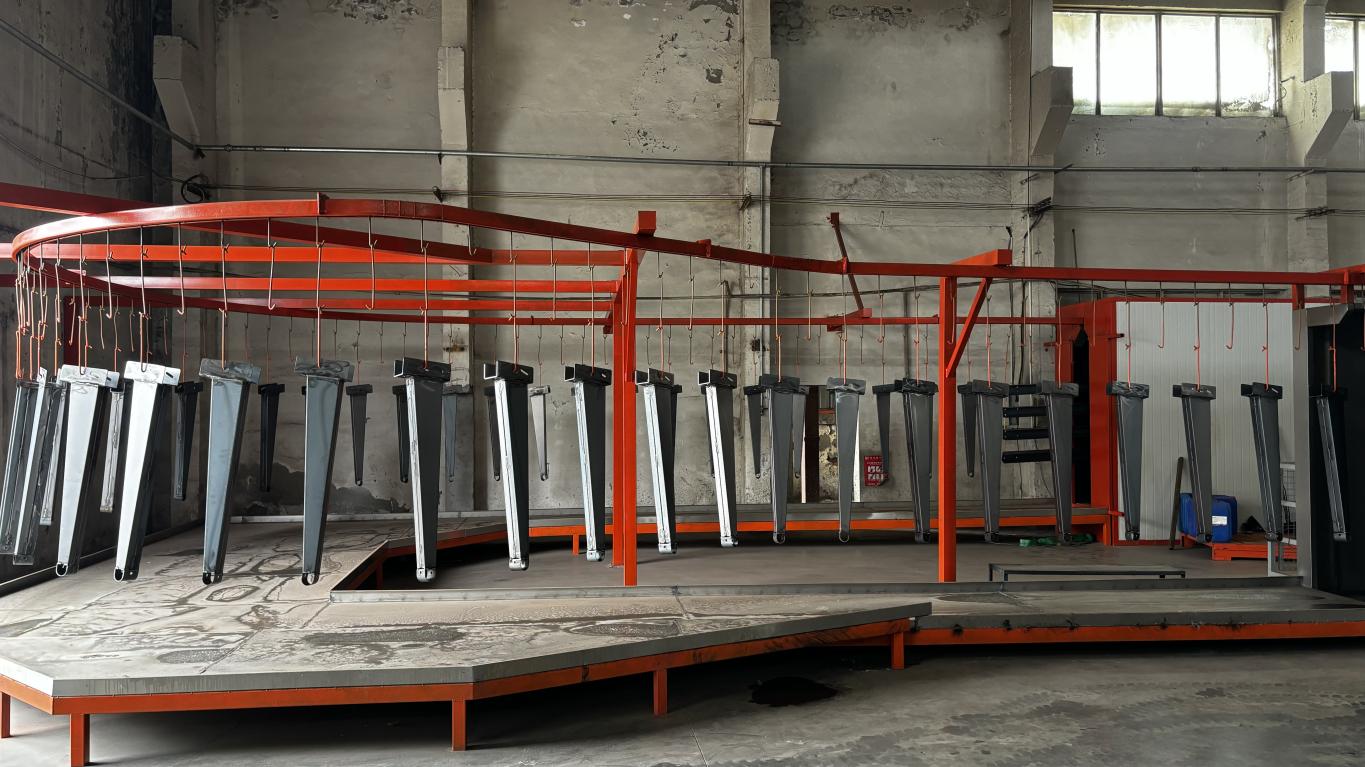
Painting Production Line
Painting Production
Cutting
Precision Sawing
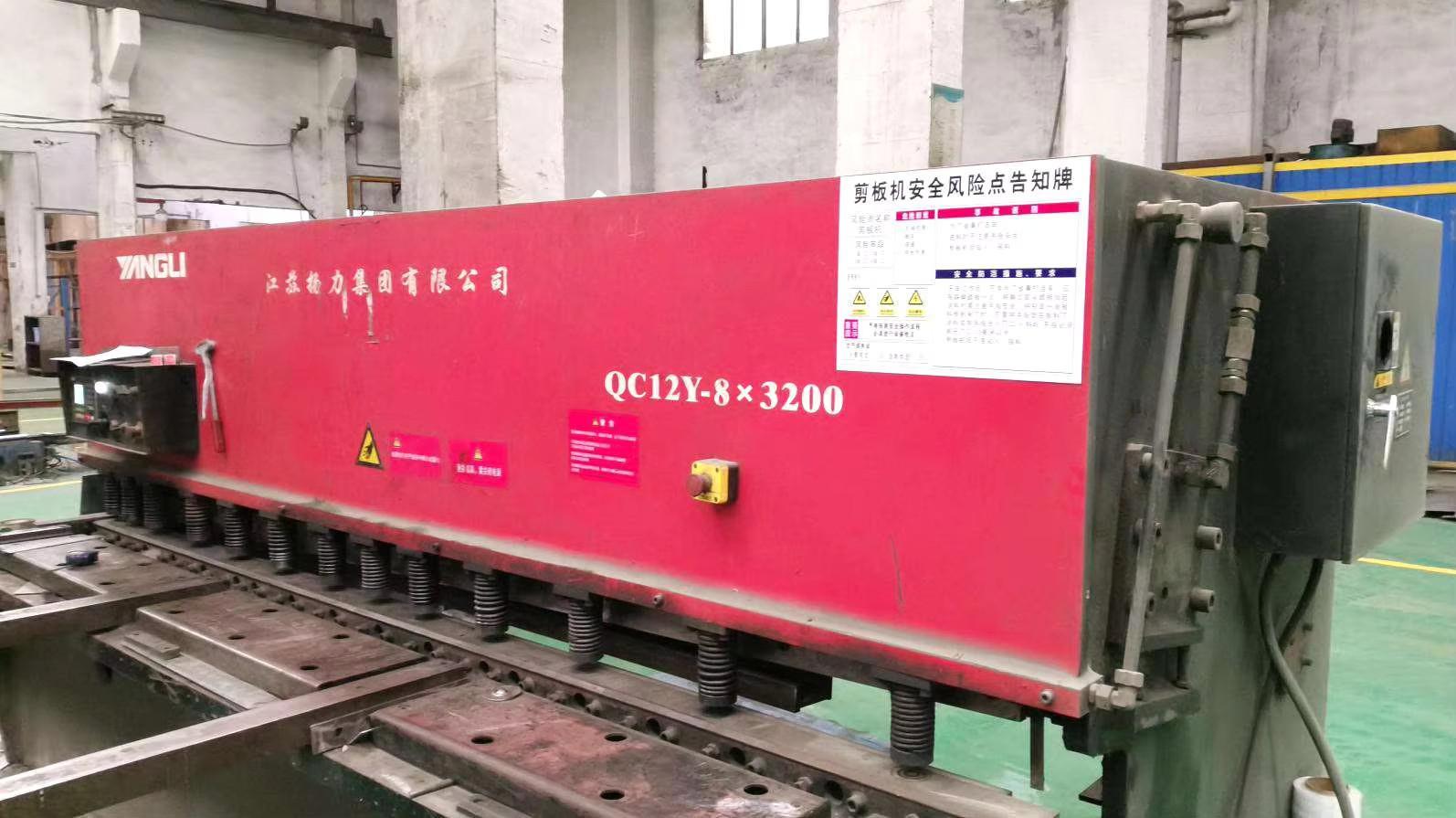
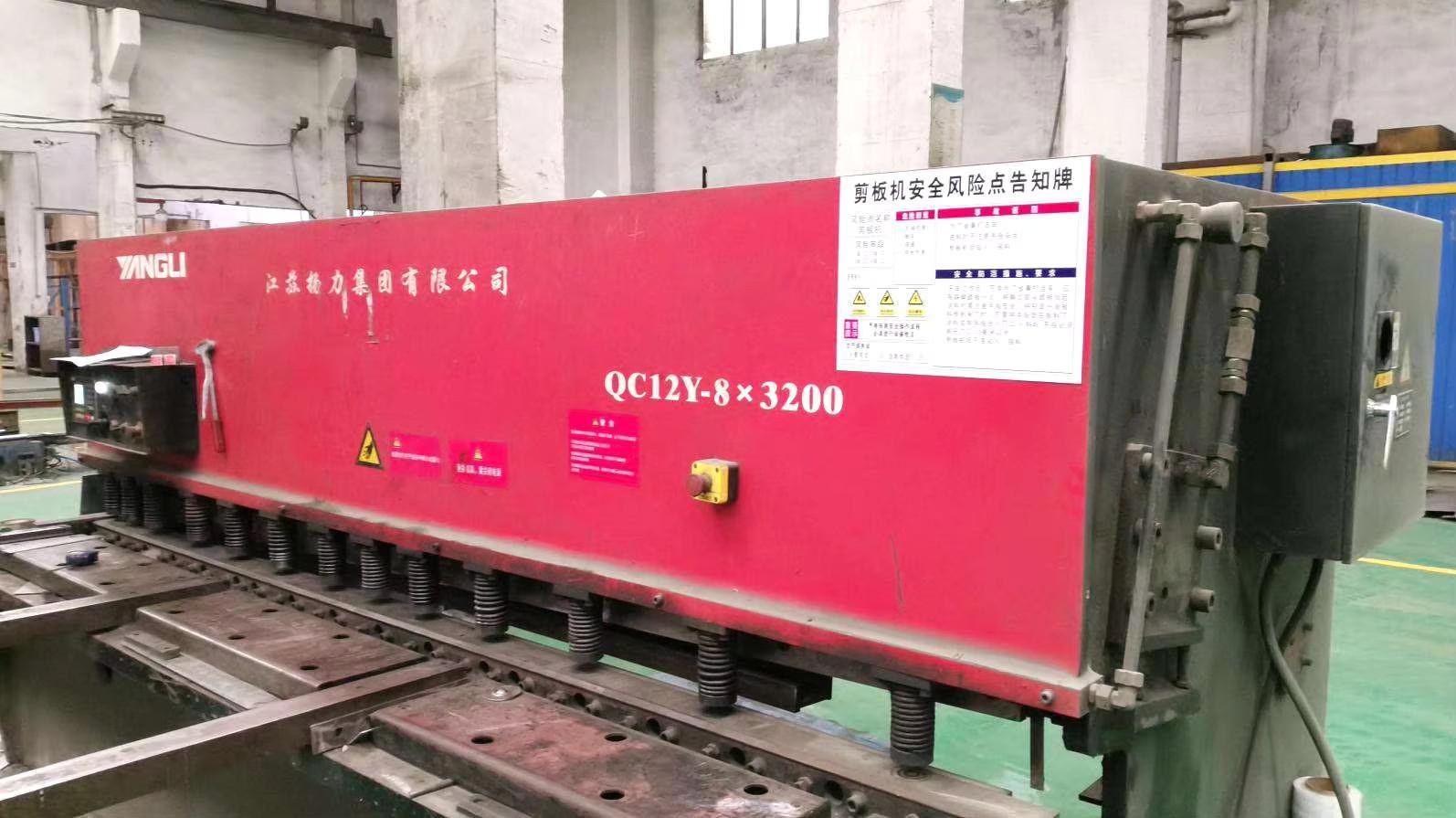
Plate Shearing
Plate Shearing
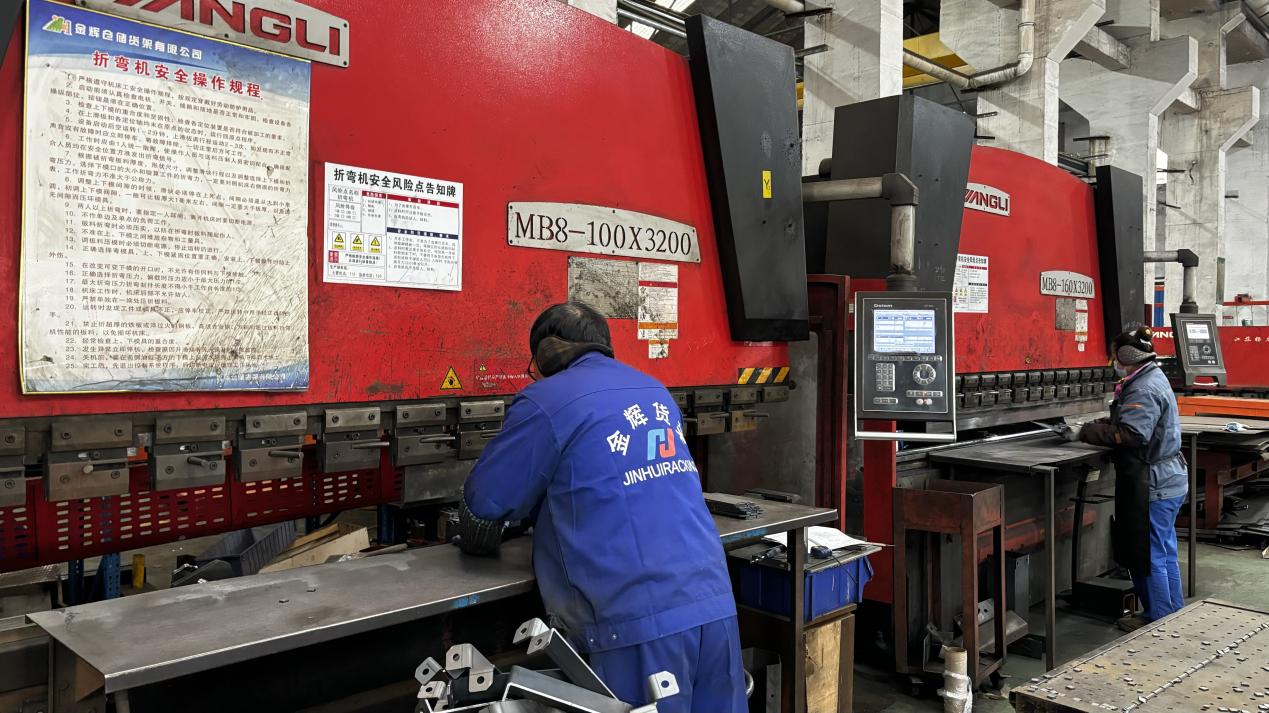
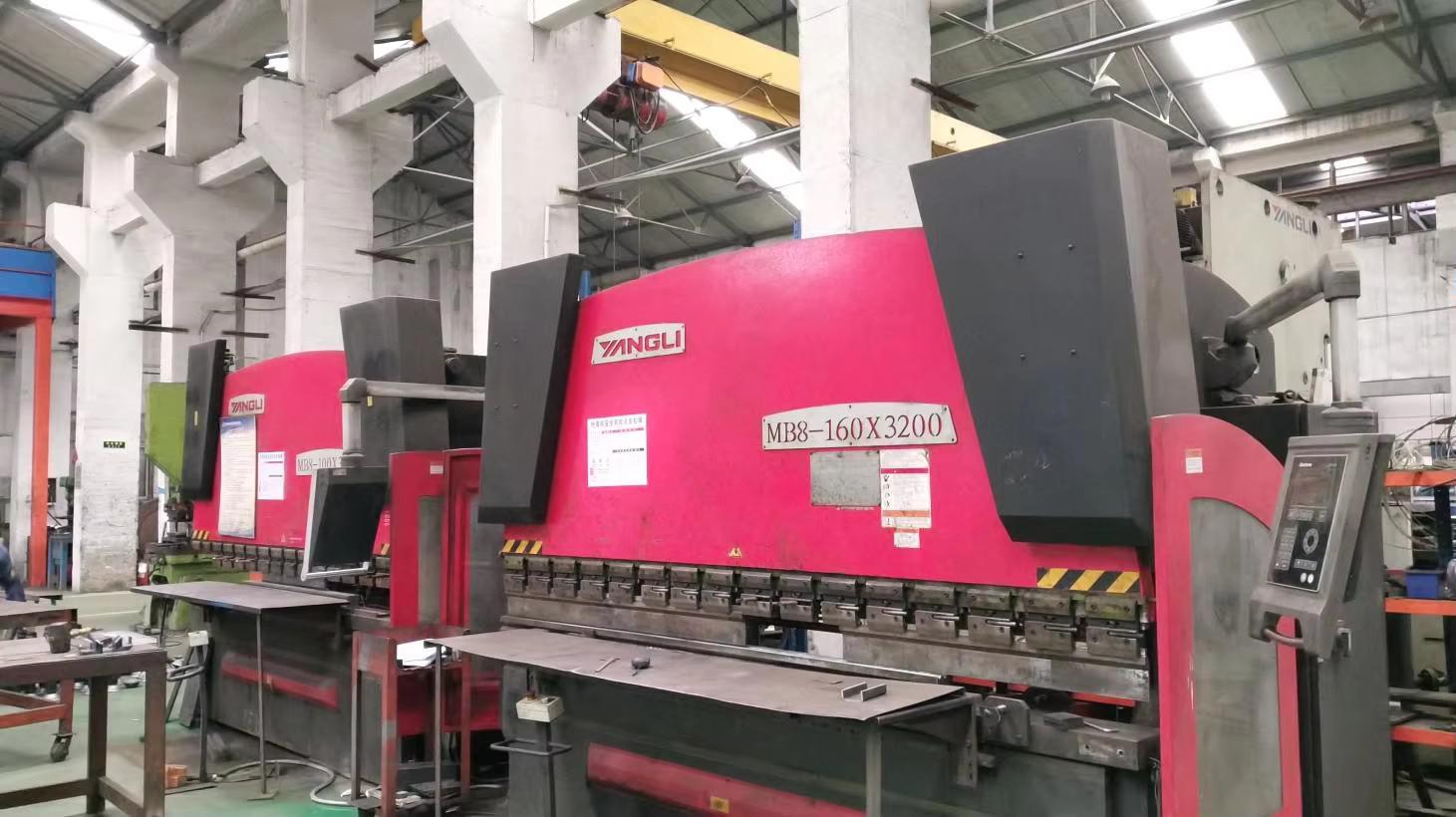
Plate Bending
Plate Bending
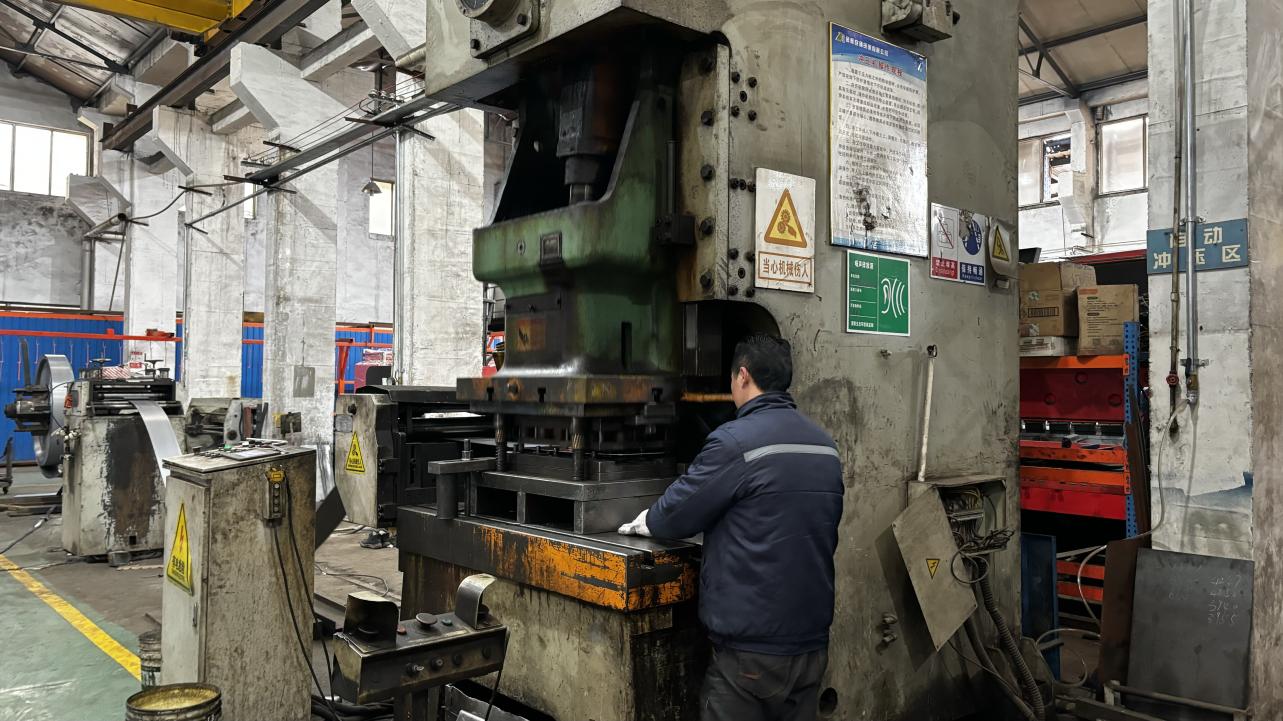
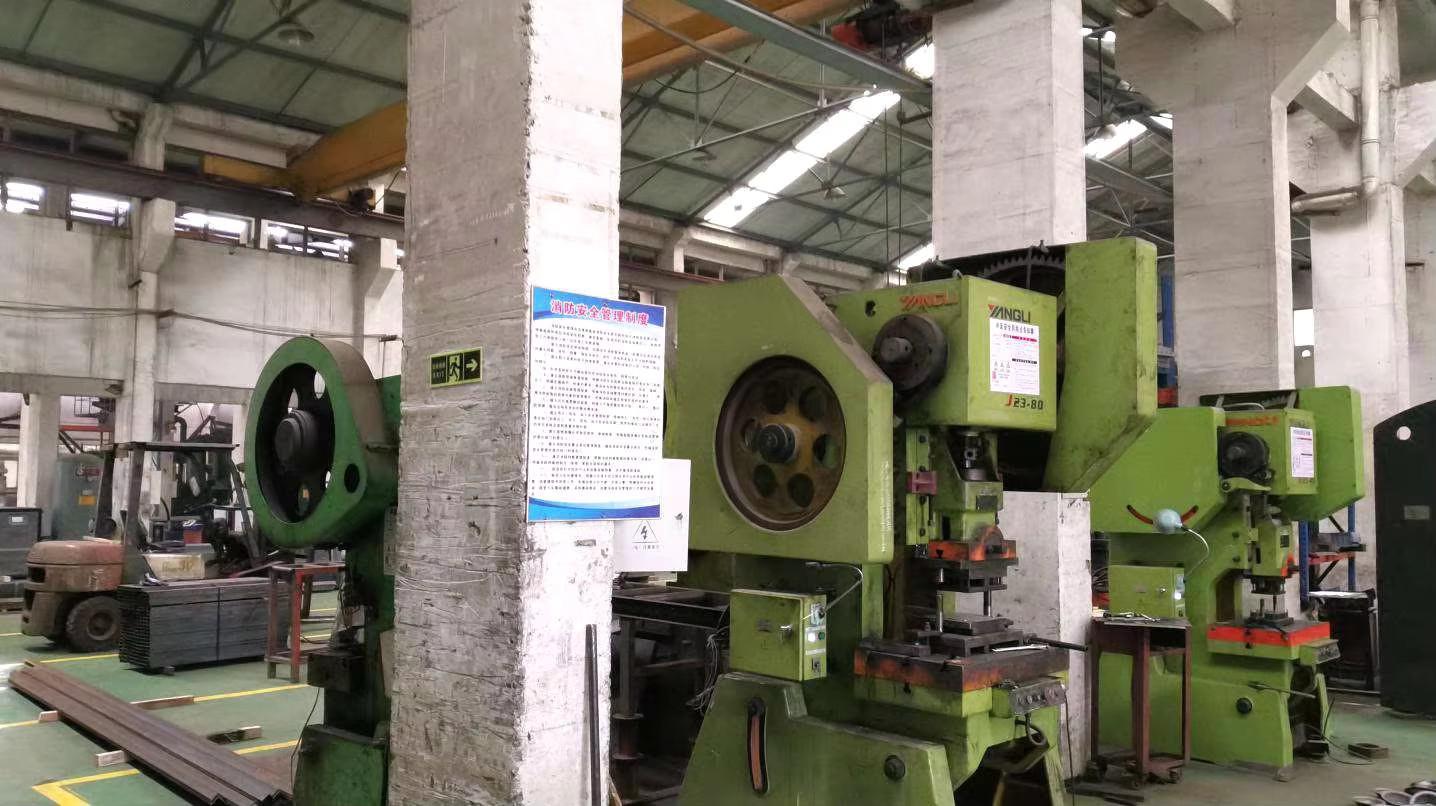
Punching
Punching
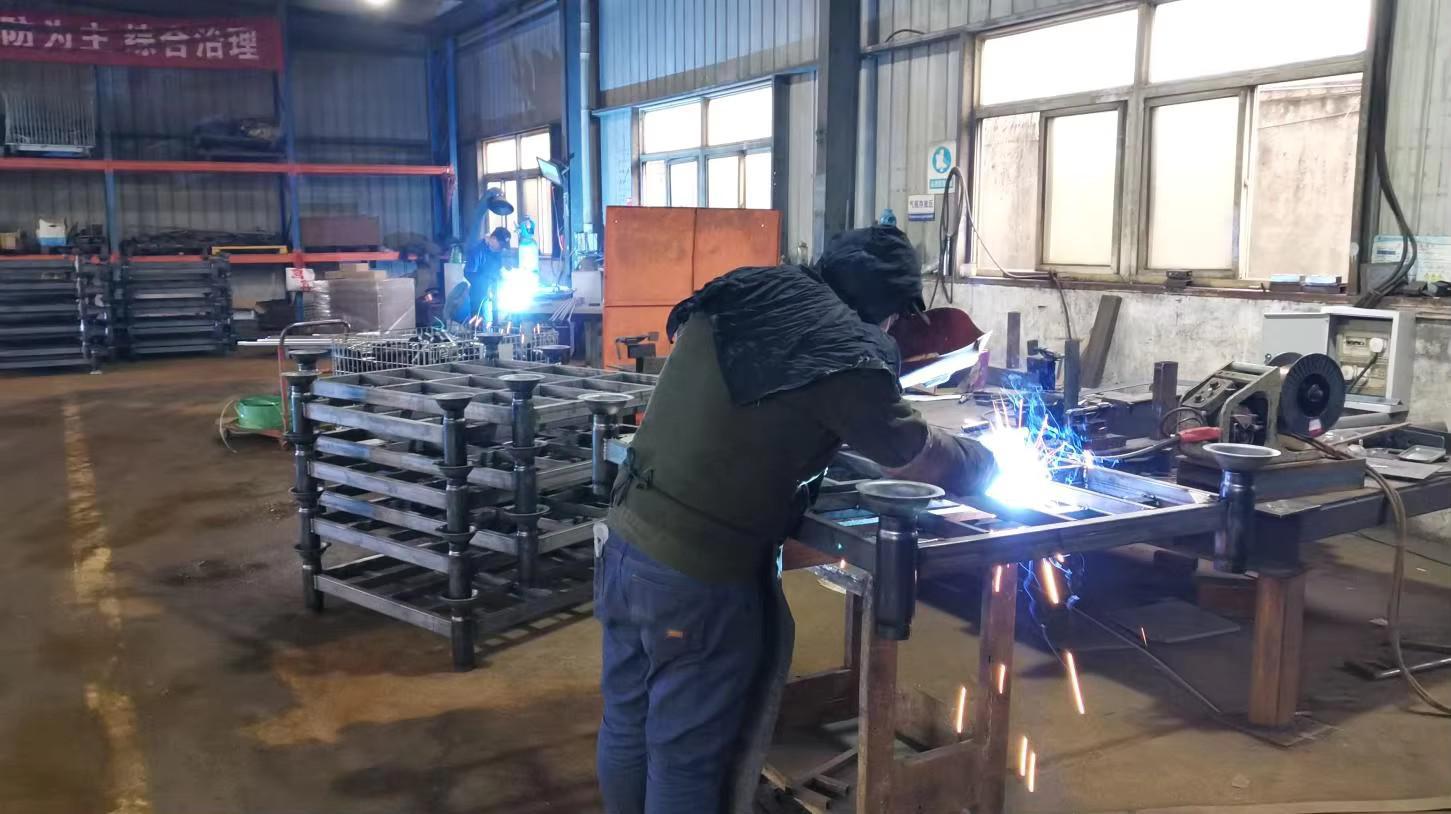
Welding
Manual Welding
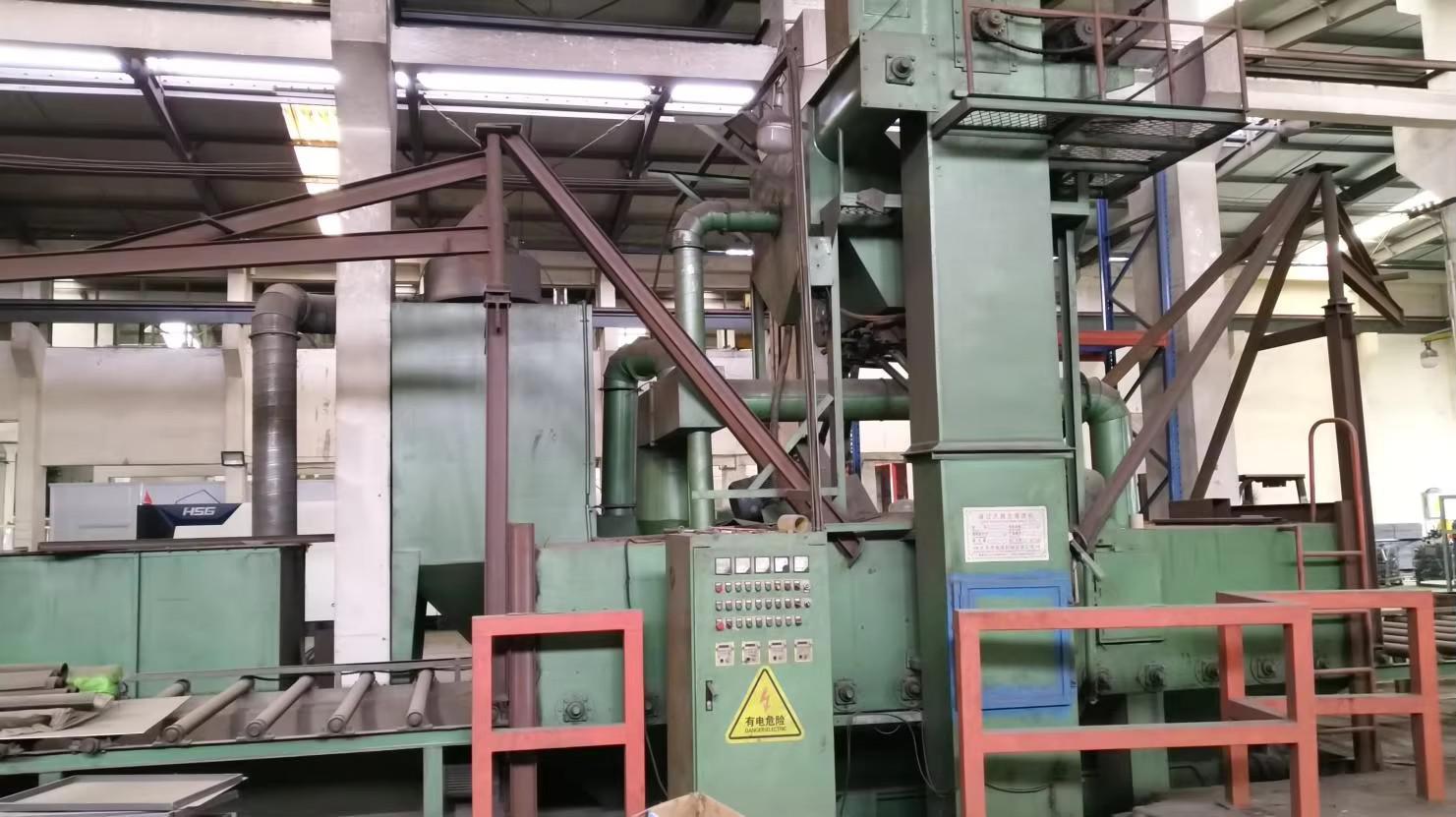
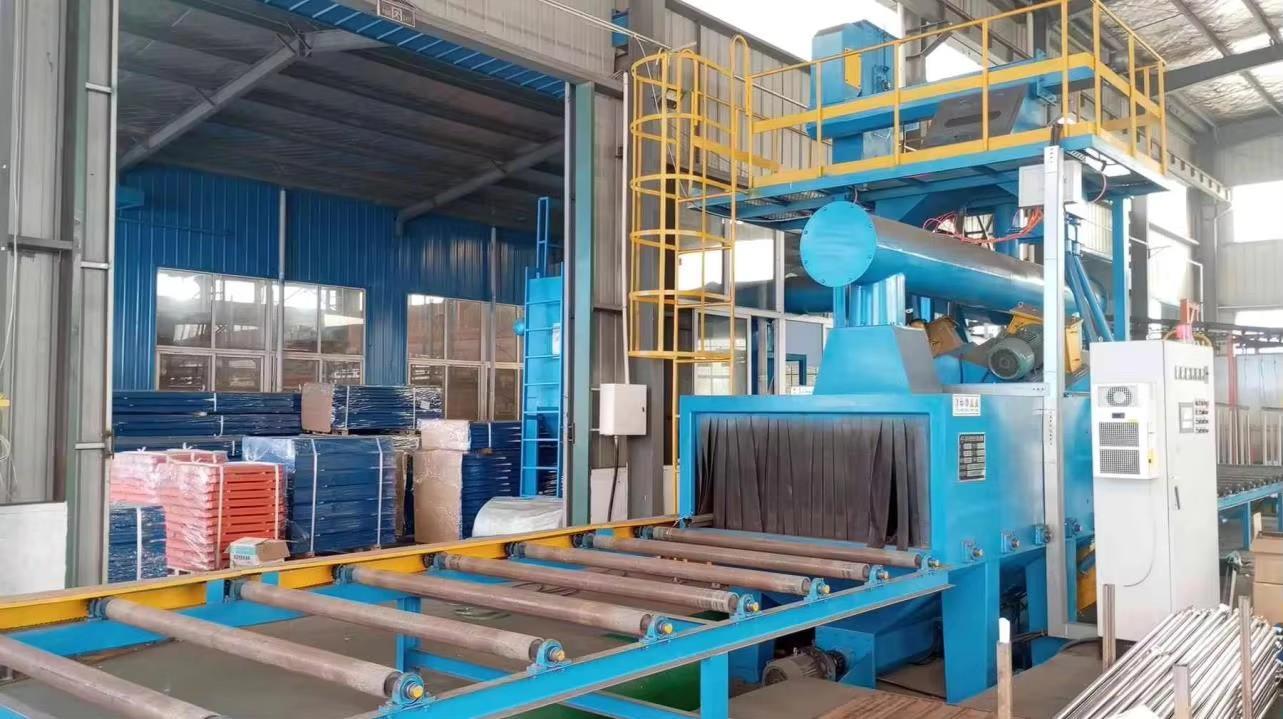
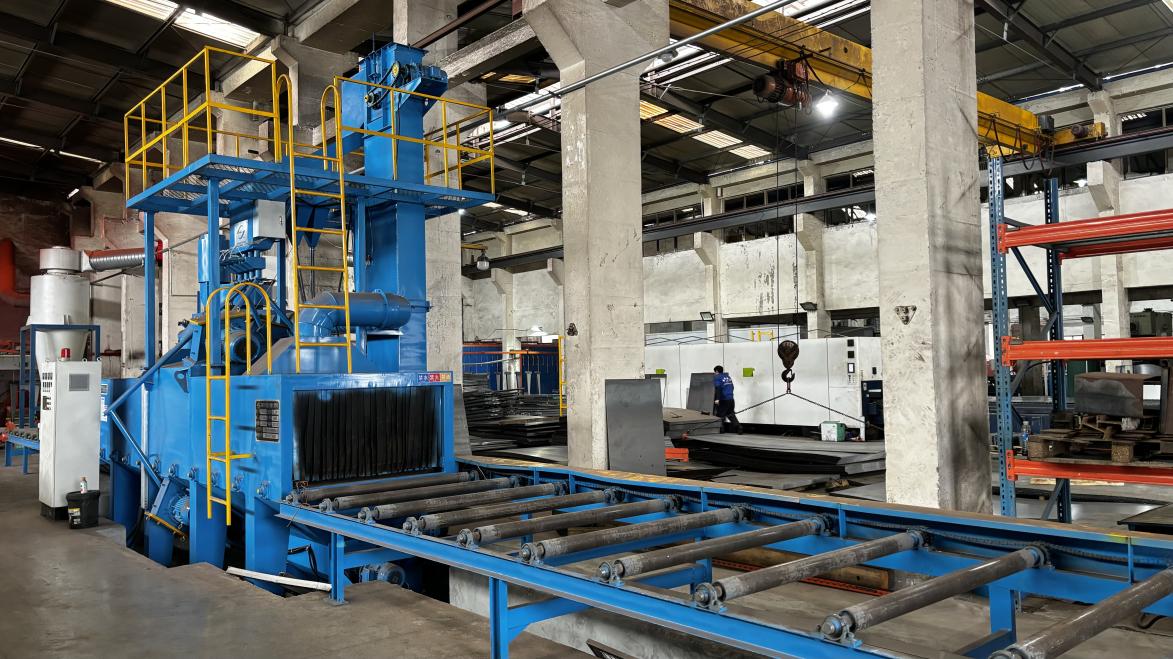
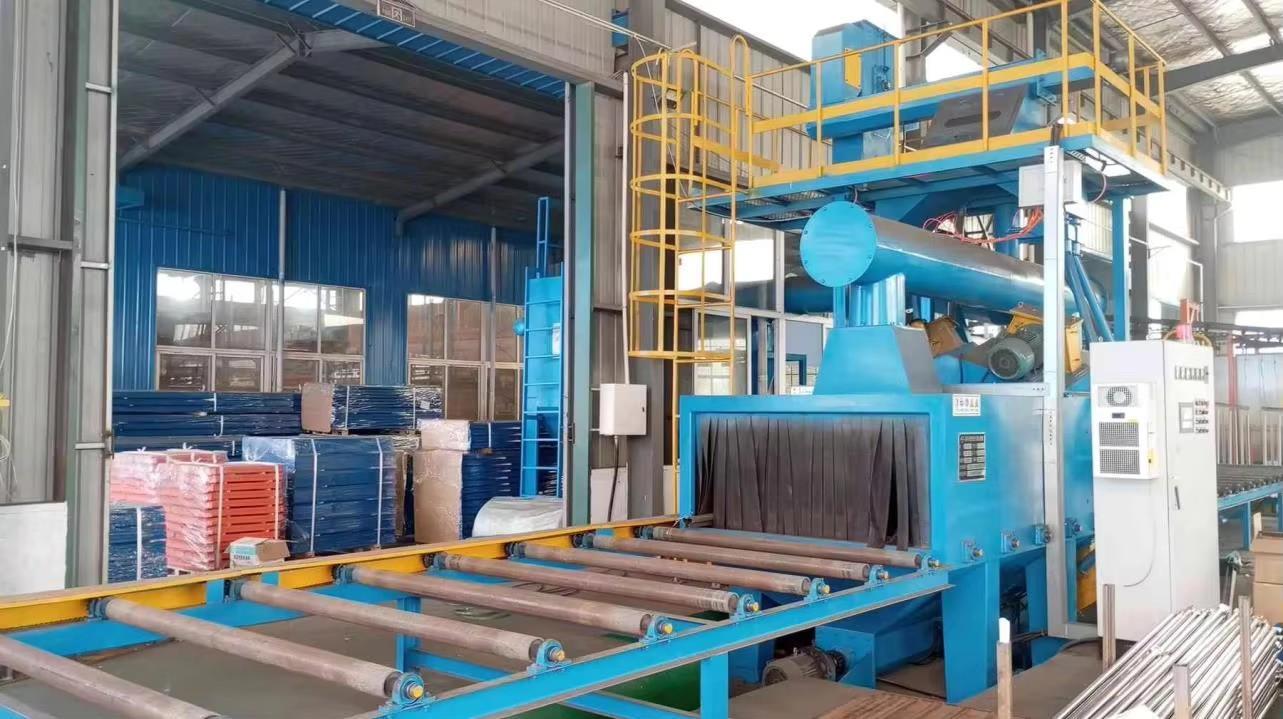
Shot Blasting
Shot Blasting
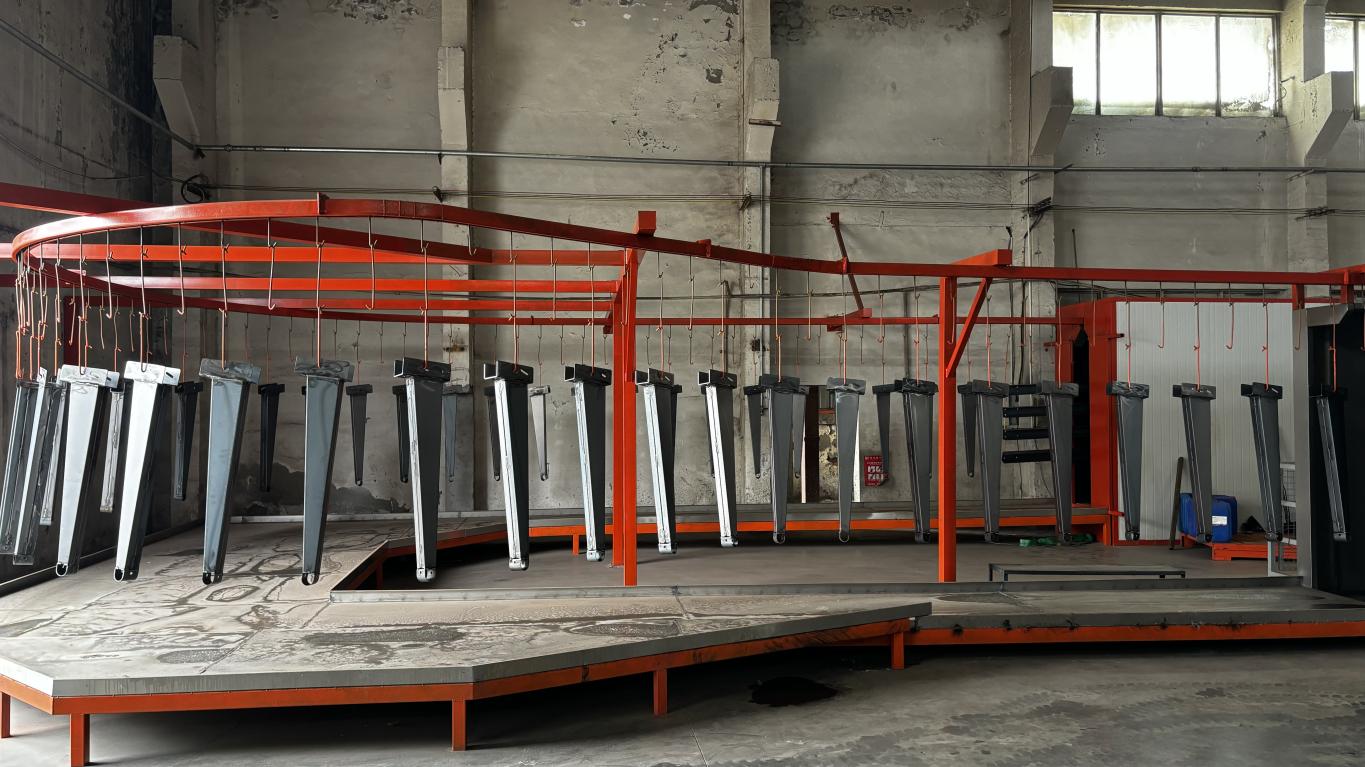
Coating
Coating & Curing
Pressing Machine
Pressing Line
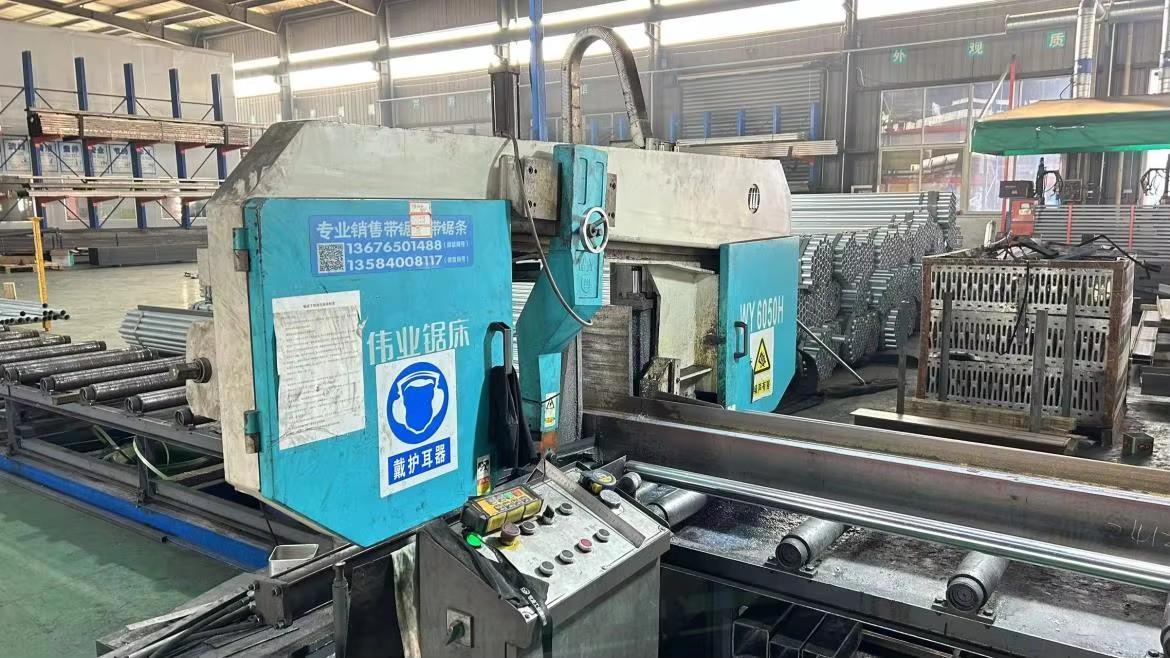
Sawing Machine 1
Sawing Machine 1
Sawing Machine 2
Sawing Machine 2
Automatic Welding Machine
CNC Robotic Welder
Polishing Machine
Surface Polishers
Painting Production Line
Powder Coating Line
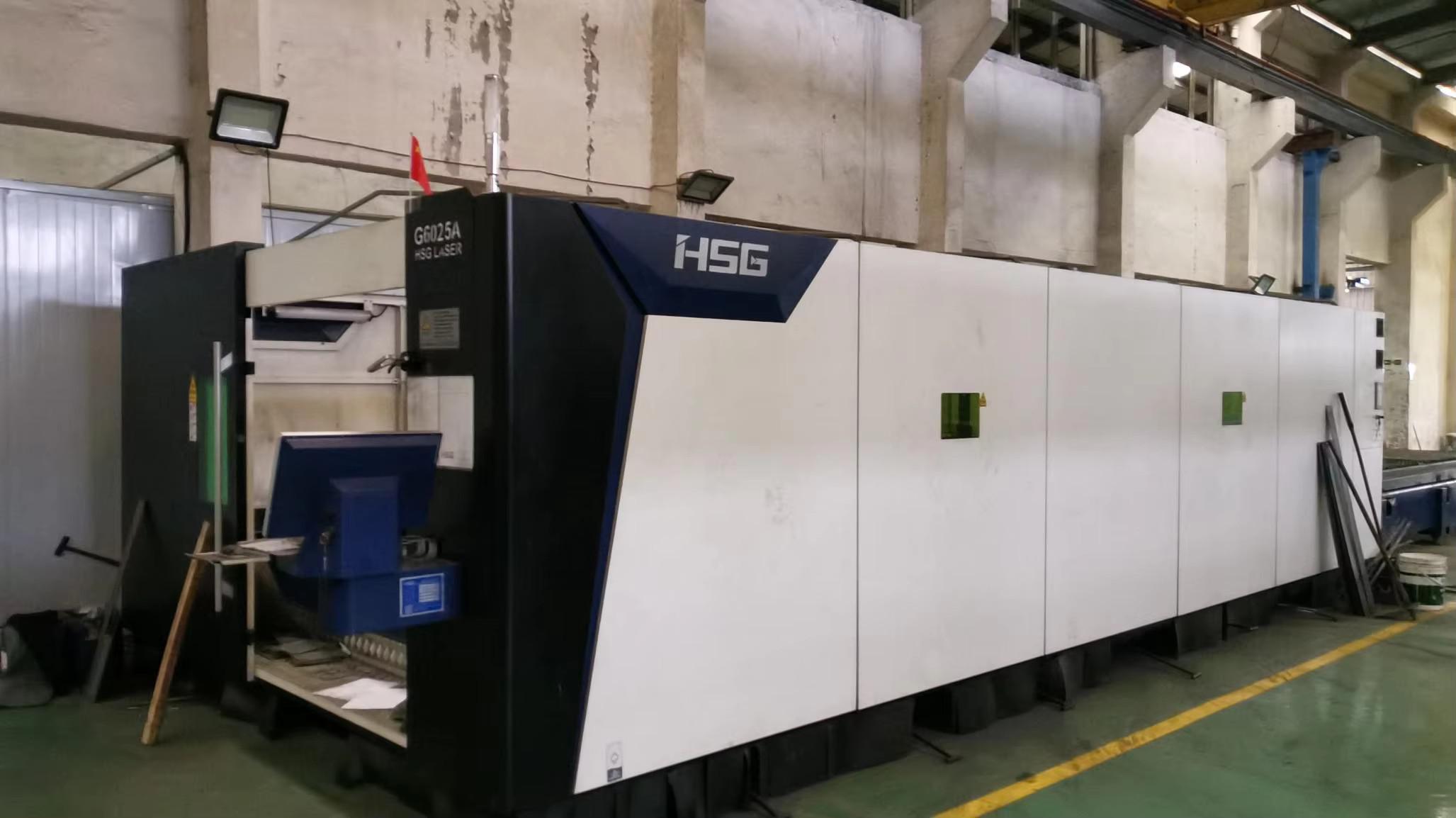
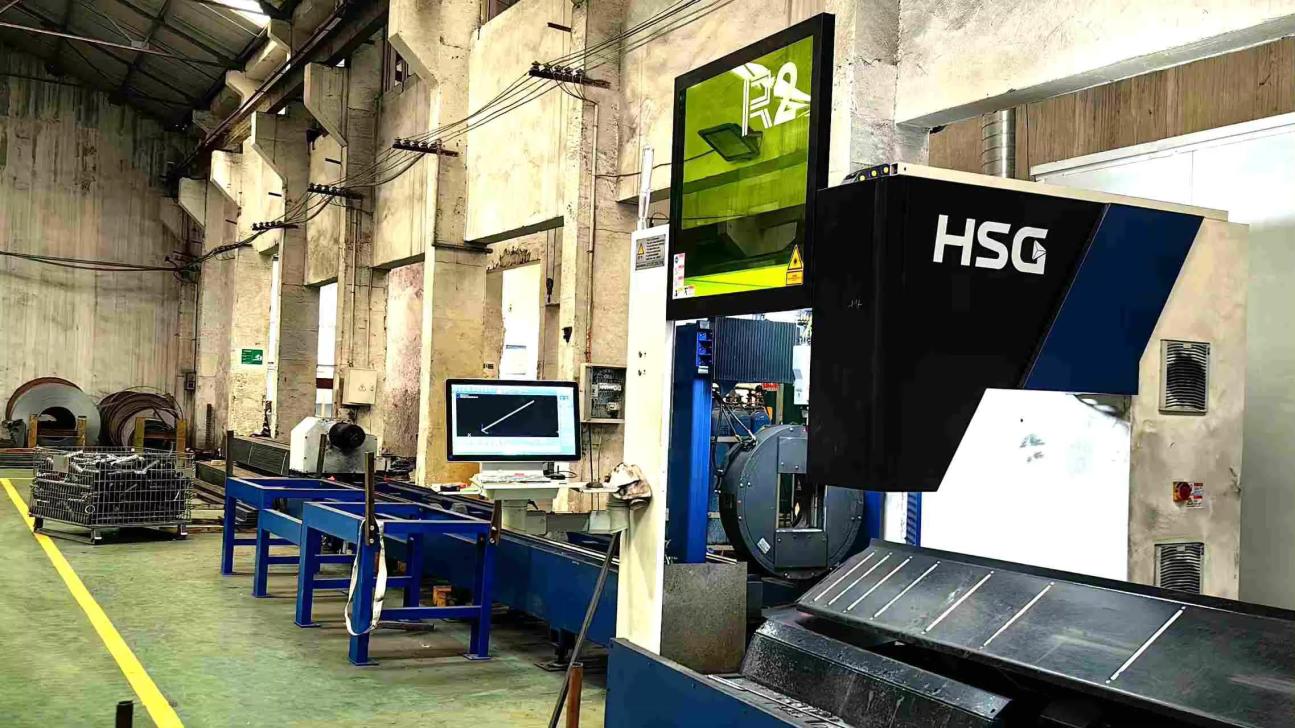
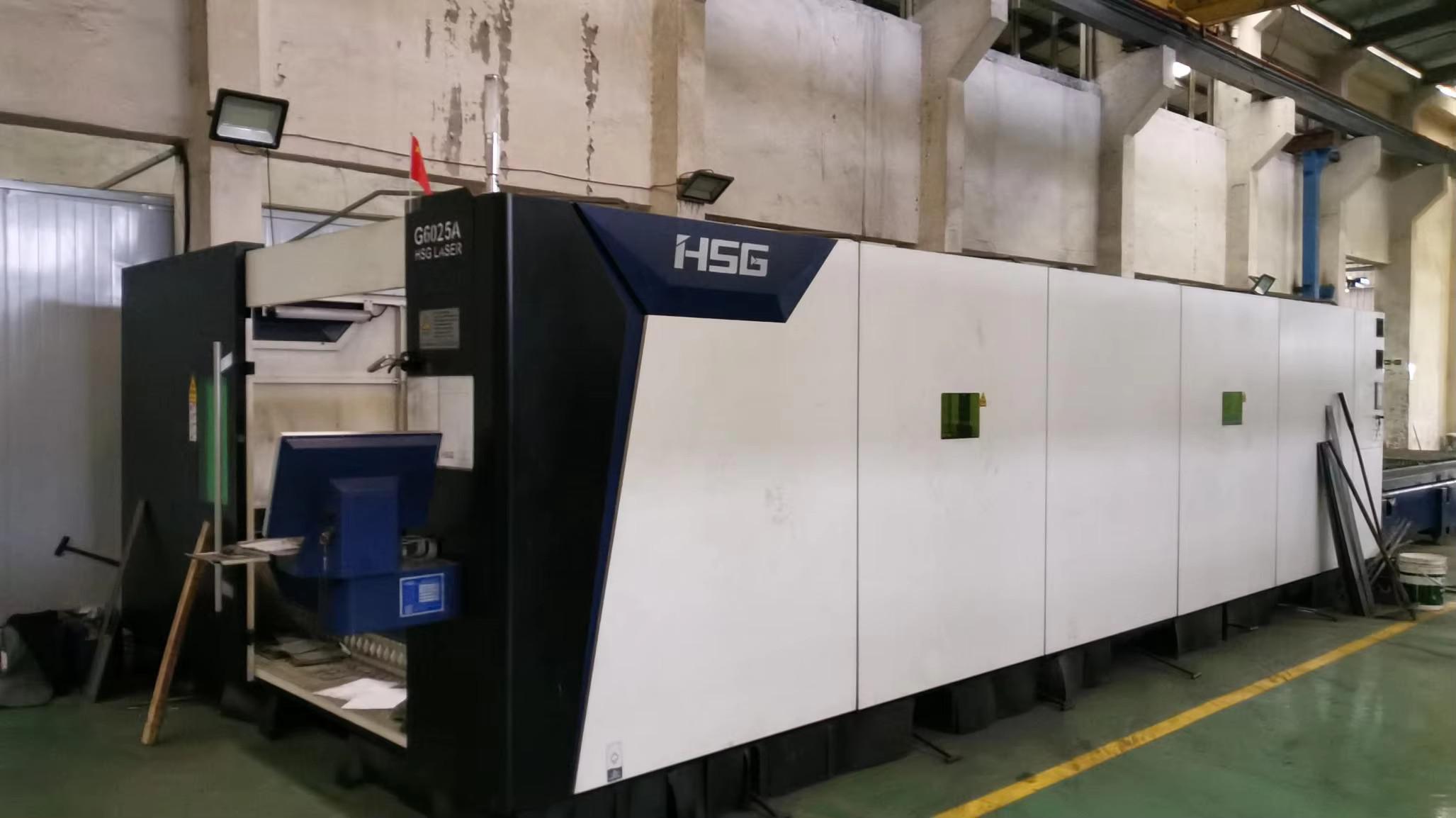
Laser Cutting Machine
Precision Laser 1
Flame Cutting Machine
Flame Cutting Line
Cutting Machine
Cutting Station
Laser Cutting Machine
Plate Shearing Machine
Plate Bending Machine
Punching Machine
Punching Machine
Semi-Automatic Continuous Punching Production Line
Continuous Punching
Welding Machine
Welding Machine
Shot Blasting Machine
Powder Spray Production Line
Powder Spray Line

Dongguan Jinhui Storage Equipment Co., Ltd.
A premier manufacturer and global exporter of high-load industrial logistics storage structures.

18,600㎡
Production Facility
$16 Million
Annual Export Revenue
14 Years
Industry Experience
68 Engineers
R&D and Engineering Team

Established in 2017, Dongguan Jinhui Storage Equipment Co., Ltd. has developed into a leading authority in the fabrication and deployment of industrial racking solutions. With a dedicated production facility spanning over 18,600 square meters, our capabilities encompass automated roll-forming lines, state-of-the-art robotic welding, high-precision laser cutting, and architectural-grade electro-static powder coating systems.
Our engineering services specialize in bespoke OEM and ODM programs. Supported by a robust network of over 980 upstream supply chain partners, we ensure uninterrupted raw material sourcing (primarily high-grade Q235B and Q355B structural steel). Jinhui racks are deployed across more than 50 countries, with major markets in Europe, North America, Southeast Asia, Australia, and the Middle East, catering to third-party logistics (3PL), automotive manufacturing, retail hubs, and heavy machinery distributors.

E-E-A-T Quality Standards & Metrology

Precision inspection tools ensure maximum product integrity, load capacities, and structural reliability.
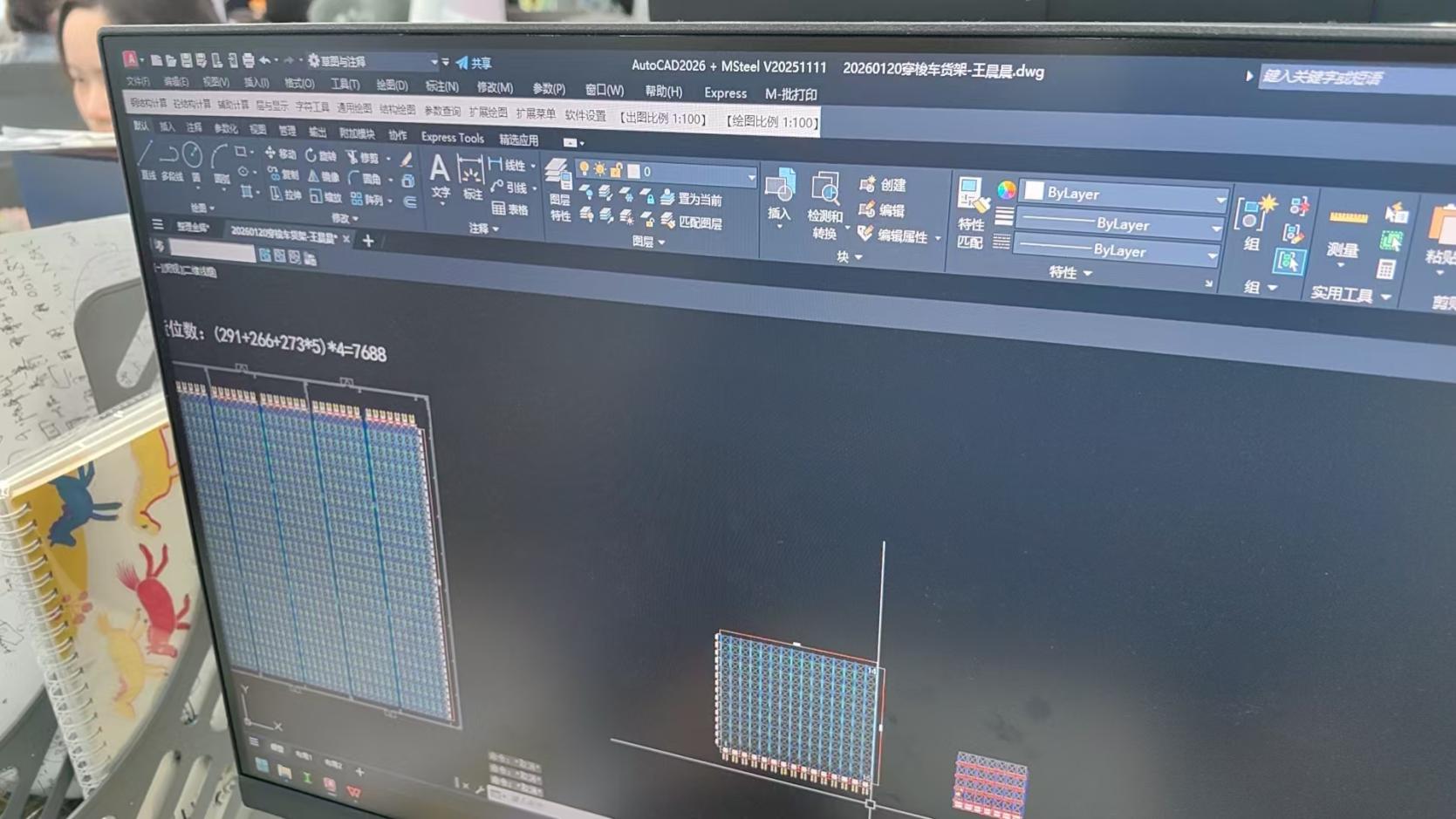
Designing
CAD/FEA Designing
Raw Materials Inspection
Material Inspection
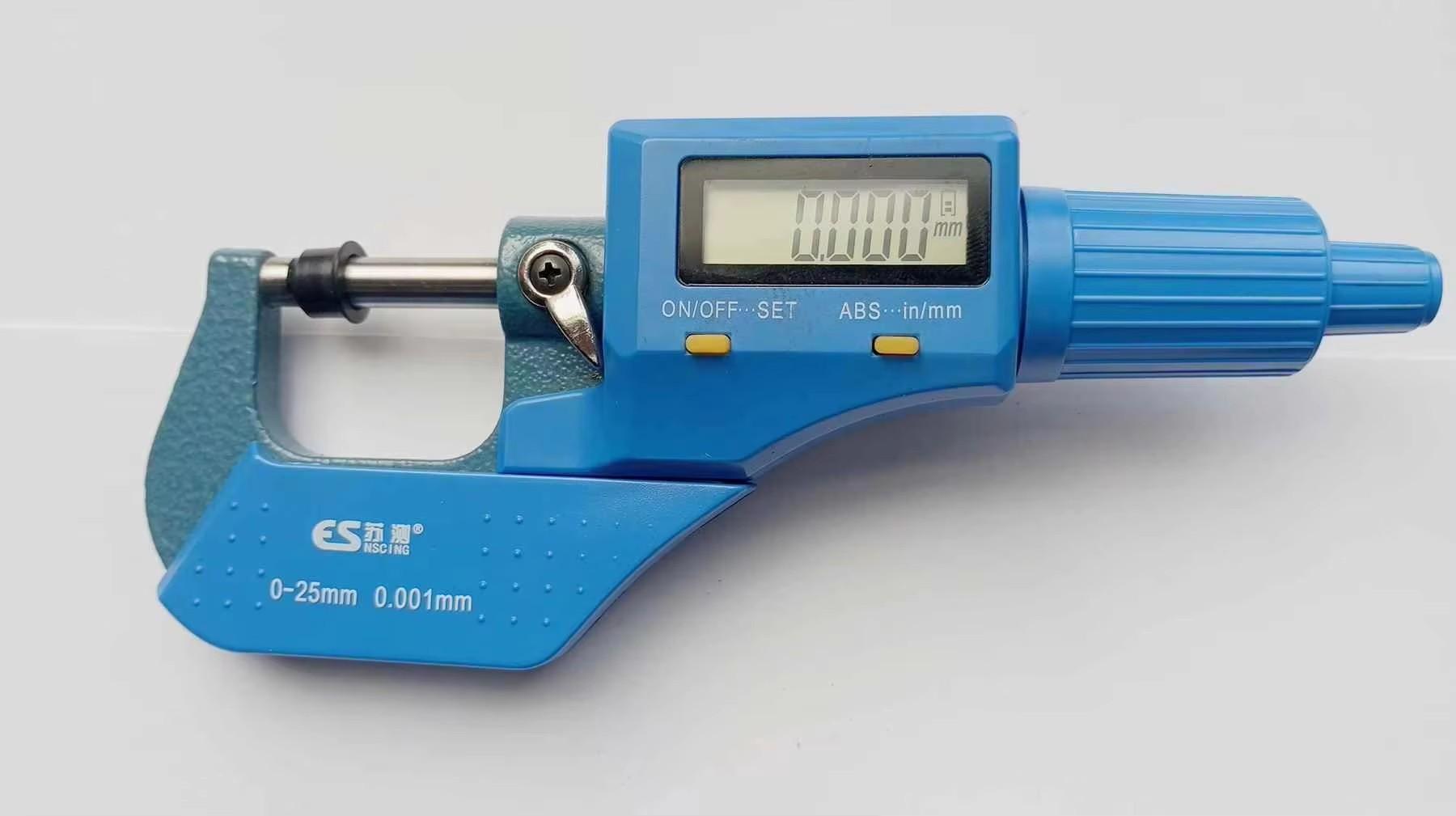
Micrometer
Micrometer Gauge
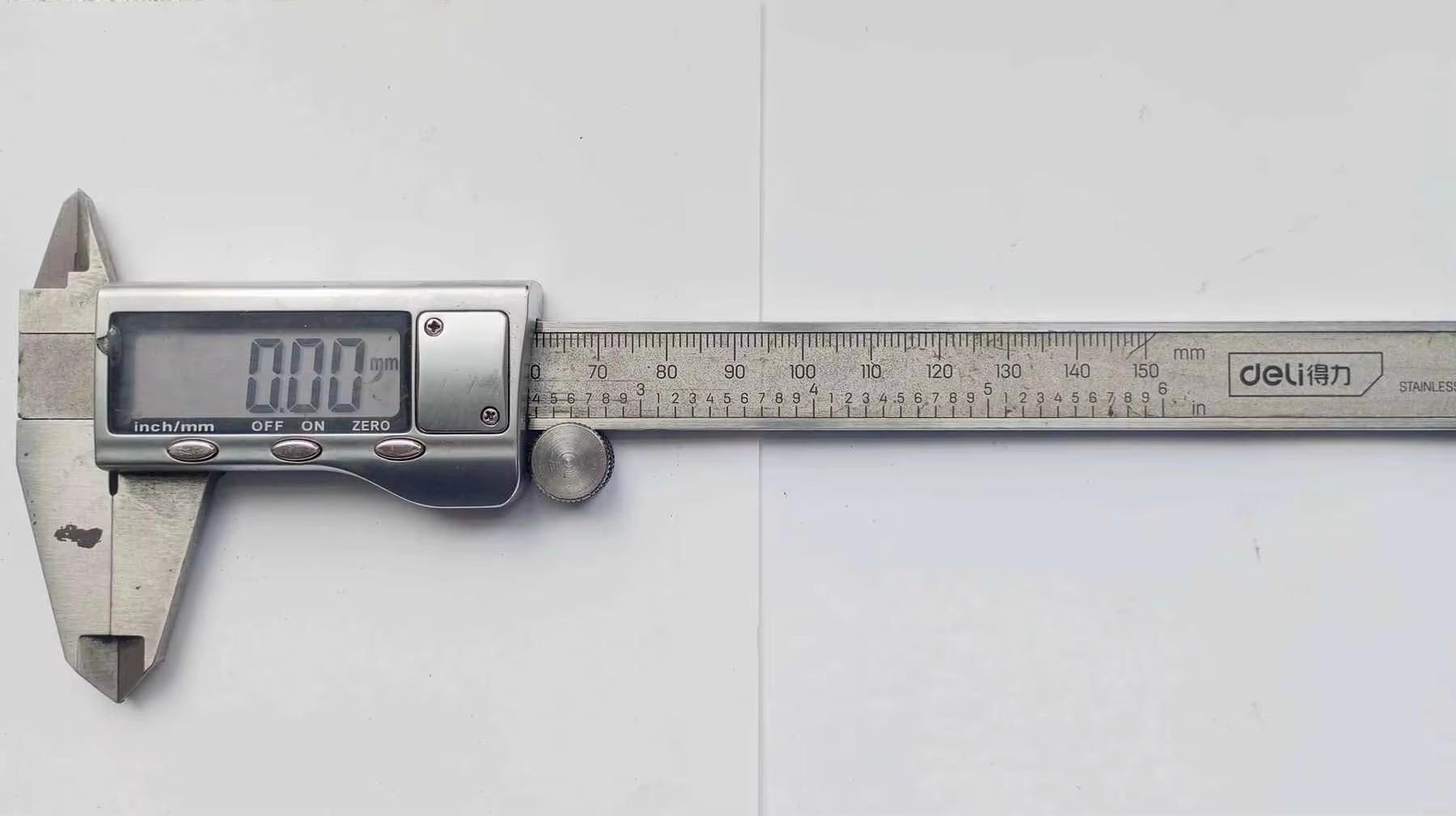
Vernier Caliper
Caliper Measurement
Thickness Gauge
Coating Thickness Gauge

Structural integrity is non-negotiable when dealing with overhead storage of heavy materials. Jinhui operates an ISO 9001:2015 certified factory, deploying 46 certified quality control inspectors. Every manufacturing batch undergoes rigorous structural assessments including:

  • Raw Materials Chemical & Tensile Testing: Verifying Q235B and Q355B yield points match engineering blueprints.
  • Ultrasonic Weld Inspection: Ensuring complete weld penetration on load-bearing arm connections and base brackets.
  • Coating Adhesion Testing: Measuring protective powder thickness (utilizing specialized coating thickness gauges) to guarantee long-term corrosion prevention, particularly for outdoor environments.
  • Deflection Analysis: Ensuring arm deflection remains within L/180 parameters under fully-rated load conditions.

Technological Roadmap & Industrial Trends

The convergence of automation, IoT, and custom engineering in modern warehousing.

The industrial storage industry is transitioning from passive structures to integrated, dynamic components of automated systems. The Jinhui research department is leading this evolution through key technical developments:

AS/RS Cantilever Integration

We design high-tolerance, structural I-beam cantilever systems capable of integrating with automated stacker cranes and retrieval shuttles, minimizing manual forklift requirements and optimizing retrieval cycles.

Seismic-Resistant Structures

Using advanced Finite Element Analysis (FEA), we customize column bases and anchors to resist horizontal forces in seismic zones (SDC C-F), keeping warehouse operations compliant and safe.

Industrial Cantilever Technical Specifications

Standard parameters for system design. Bespoke calculations are provided per project layout.

Parameter Roll-Formed Cantilever Systems Structural Steel I-Beam Systems
Common Material Grade High-strength Q235B Cold-Rolled Steel Q355B Hot-Rolled Structural Steel
Column Heights Up to 6,000 mm Up to 12,000 mm
Arm Capacity (per arm) 200 kg to 1,200 kg 800 kg to 5,000+ kg
Arm Angles Horizontal or tilted (2° - 4° upward pitch) Adjustable or welded with safety end-stops
Finishing Methods Electrostatic Powder Coat (Epoxy Polyester) Hot-Dip Galvanizing (HDG) / Painted
Ideal Applications Light-to-medium pipes, plastic channels, tubing Structural steel bars, automotive frames, heavy timber

Engineering & Specification FAQ

Answers to common structural, layout, and safety design questions.

What is the difference between roll-formed and structural steel cantilever racks?
Roll-formed cantilever systems are shaped from coil sheet steel through roll-forming mills at room temperature, creating light-to-medium-duty storage (suitable for hand-loading or light forklift access). Structural cantilever racks are built from hot-rolled wide-flange I-beams, offering high resistance to impact damage and extreme load capabilities—ideal for storing steel stock, casting molds, and heavy coils in harsh industrial spaces.
How is the load capacity calculated for cantilever racking?
Load capacity is calculated per arm based on uniformly distributed loads (UDL). Total load must be divided equally across the number of supporting arms. The vertical upright column must be engineered to support the cumulative capacity of all connected arms. Designers must also account for the dynamic loading moment to prevent overturning or column twist.
What role does arm pitch play in cantilever design?
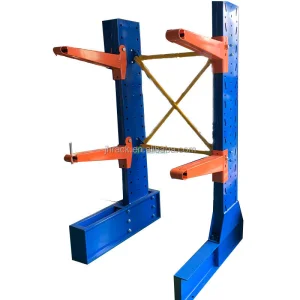
Cantilever arms are typically designed with a slight upward pitch (commonly 2° to 4°) to compensate for natural steel deflection when loaded. This prevents long pipes or bars from rolling forward. If the arms deflect under load, they level out horizontally rather than sloping downward.
Are outdoor cantilever racking systems protected from rust?
Yes. For outdoor environments, we use hot-dip galvanizing (HDG). This process coats the steel in a protective zinc layer that prevents rust and corrosion in rainy, coastal, or high-humidity climates. For standard indoor warehouses, we apply an electrostatic powder coat.
Can a single-sided cantilever rack be converted to double-sided?
It depends on the base and column design. Most of our systems feature modular columns punched on both sides, allowing you to convert a single-sided rack to a double-sided configuration by swapping the single base for a double base and adding arms. This modular design helps adapt to changing storage needs.
How do you prevent forklift impacts from damaging cantilever structures?
To minimize forklift damage, we recommend installing heavy-duty floor-anchored guide rails along the racking bays, especially for narrow-aisle (VNA) forklifts. Additionally, we provide wrap-around column protectors, reinforced base entries, and brightly colored safety finishes to maximize driver visibility.
What are arm retention pins and why are they necessary?
Arm retention pins (or drop pins) are removable steel stoppers placed at the front tip of cantilever arms. They act as physical barriers that prevent round pipes, conduit, and coils from rolling off the arm ends, making loading and unloading safer.
How do seismic ratings affect cantilever rack configuration?
In areas with seismic activity, columns must be manufactured with thicker steel profiles, larger base plates, and double anchoring to handle dynamic horizontal forces. Our R&D team uses FEA simulation software to calculate specific structural requirements for earthquake-prone zones.
What is the standard deflection limit for safety compliance?
According to standard FEM and RMI guidelines, the maximum allowable deflection for loaded cantilever arms should not exceed L/180 (where L is the length of the arm). Exceeding this limit indicates overloading or fatigue, which requires immediate inspection and replacement.
How does Jinhui ensure quality control on bulk exports?
Every export shipment undergoes our strict multi-point inspection protocol. Our QA team checks steel grade certificates, tests weld penetration via ultrasound, measures powder coating thickness, and performs test assemblies. We load containers with protective wrapping to prevent shipping damage.
All Cantilever Racking Products