What Is the Best Carton Flow System for Global Buyers?

Time:2026-10-12 Author:Sophia
0%

Choosing the best Carton Flow System for global buyers is not simply a rack comparison. It is a decision about movement, labor, product protection, and future change. A grocery distributor may need dense lanes for canned goods, while an electronics warehouse may require softer handling and tighter picking control. The right design begins with real operating conditions, not a glossy specification sheet.

John Shook, a respected lean operations expert, reminds teams, “There is no substitute for going to the gemba.” That advice fits carton flow planning closely. Walk the pick face. Watch replenishment. Measure carton sizes, order frequency, travel distance, and queue time. Small details matter. A 600-millimeter lane can behave very differently from a 900-millimeter lane when cartons vary widely. Roller pitch, brake placement, frame depth, and label visibility also influence daily performance.

Global buyers should compare load capacity, corrosion resistance, spare-part access, installation support, and local service capability. Standards differ across facilities. So do floors, climates, labor skills, and safety expectations. No option is perfect. A highly dense system may slow replenishment, while a flexible system may consume more space. This guide examines those trade-offs with practical evidence, technical reasoning, and a willingness to question convenient assumptions. The best Carton Flow System is not always the cheapest or most automated. It is the one that keeps products moving accurately, safely, and consistently as business conditions change.
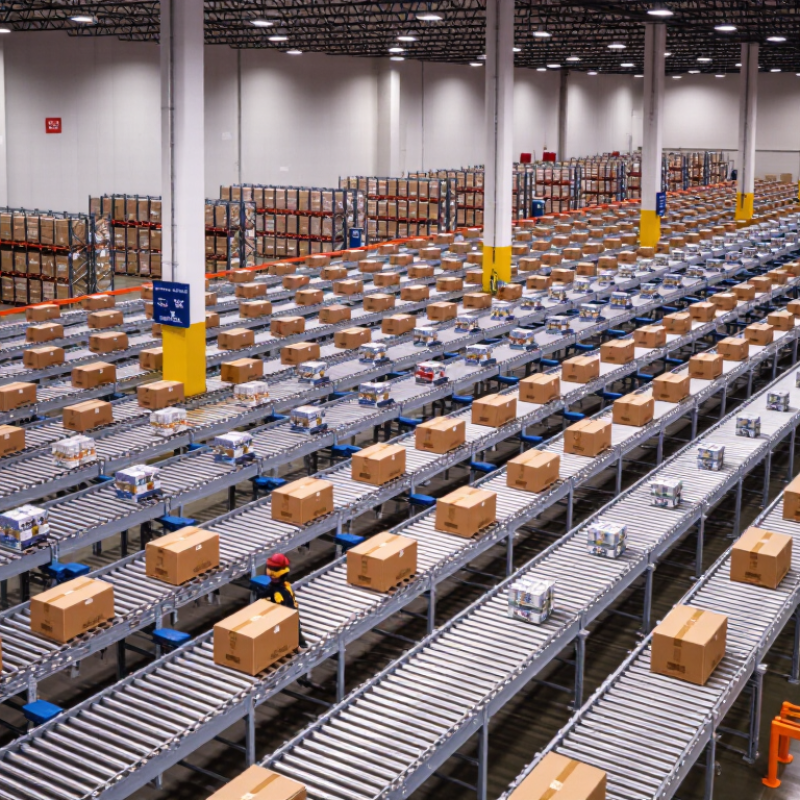
What Is the Best Carton Flow System for Global Buyers?

Definition and Purpose of a Carton Flow System

What Is the Best Carton Flow System for Global Buyers?

Definition and Purpose of a Carton Flow System

A carton flow system is a gravity-fed storage solution for boxed goods. It uses slightly inclined roller lanes, allowing cartons to move from the loading side to the picking side. Workers load products from the rear and retrieve them from the front. This design supports first-in, first-out rotation when cartons are placed correctly.

Its main purpose is to improve picking speed, stock visibility, and space usage. A carton flow lane keeps each product facing the aisle, so workers can identify labels without searching through deep shelves. Separators can create clear product positions. Stop rails help control carton movement. These small details matter during busy shifts.

In practical warehouse assessments, the right system depends on carton weight, size, turnover, and replenishment habits. Heavy cartons may require stronger rollers. Small packages may need tighter lane spacing. A fast-moving item can justify a dedicated lane, while slow stock may waste valuable space there. It is not a cure-all. Poor carton quality can cause jams, and incorrect loading can defeat stock rotation. Buyers should test sample cartons, measure aisle access, and review worker movement before approving a final layout. A low purchase price may become expensive if maintenance and replenishment time are ignored.

Key Components and Operating Principles

What Is the Best Carton Flow System for Global Buyers?

Key Components and Operating Principles

A carton flow system moves cartons from the replenishment side to the picking face by gravity. Its main components include a strong rack frame, roller tracks, lane dividers, rear stops, and front access guides. Each part supports consistent movement and safer picking. Not glamorous, but important. Clear labels help workers identify products, quantities, and rotation rules quickly.

The system usually follows a first-in, first-out principle. Workers load cartons at the rear, and gravity moves them toward the front. Pickers remove the oldest carton from the accessible position. A suitable lane slope depends on carton weight, base material, and roller resistance. Too little slope causes stoppages. Too much slope can create impact damage. Adjustable brakes or speed controllers may reduce sudden movement.

Global buyers should test real cartons before approving a design. Carton sizes often vary more than initial data suggests. Measure width, height, weight, packaging strength, and daily volume. A practical trial can reveal rubbing, tilting, or difficult replenishment. Small details matter. The operator’s hand position also affects productivity and safety.

Reliable systems need routine inspections, especially around rollers, fasteners, labels, and lane stops. Local workplace requirements should guide guarding, aisle spacing, and load limits. Supplier documentation should explain installation, maintenance, and replacement parts clearly. Even careful calculations can miss seasonal demand or damaged cartons. That weakness deserves review before full deployment.

What Is the Best Carton Flow System for Global Buyers? - Key Components and Operating Principles

Evaluation Dimension Key Component or Principle Typical Data or Range Why It Matters to Global Buyers
Storage Method FIFO carton flow First-in, first-out product rotation Helps reduce aging, obsolescence, and picking errors for dated or batch-controlled goods.
Load Direction Rear loading with front picking Two-sided access; replenishment and picking occur from opposite ends Separates replenishment traffic from order-picking activity and improves workflow safety.
Roller Track Gravity roller conveyor or wheel track Common roller diameters: approximately 25–60 mm; track spacing depends on carton base The track must support the carton without excessive friction, tipping, or jamming.
Lane Inclination Gravity-driven slope Often designed within approximately 3°–8°, subject to carton weight, surface, and roller type A correct slope allows cartons to advance consistently without excessive speed or stalled movement.
Carton Compatibility Carton size, weight, and base quality Typical planning range: about 5–50 kg per carton; confirm actual equipment limits before purchase Uniform, rigid carton bottoms provide more reliable flow than soft, damaged, or irregular packaging.
Lane Width Usable carton-flow lane width Usually selected to exceed the carton width slightly while preventing side-to-side instability Correct clearance supports smooth movement and maximizes storage density.
Lane Length Depth from replenishment side to picking side Determined by carton depth, required stock quantity, and replenishment frequency Longer lanes increase inventory per lane but may require more careful speed and brake control.
Flow Control Speed controllers, brake rollers, or controlled-flow rollers Used when cartons are heavy, lanes are long, or operating speed must be limited Reduces impact between cartons and improves operator safety at the picking face.
Front Stop Stop rail or pick-face retaining device Retains the lead carton while allowing operators to remove stock from the front Prevents cartons from falling and defines a consistent picking position.
Lane Separators Adjustable dividers or guide rails Configured according to carton width and the number of stock-keeping units per bay Keeps cartons aligned, improves product identification, and supports flexible SKU allocation.
Frame and Uprights Structural rack frame, beams, and supports Load capacity must be calculated for the total bay load, not only one carton Adequate structural capacity is essential for long-term stability and compliance with local safety requirements.
Picking Performance Direct access to the leading carton Typically reduces reaching and searching compared with deep static shelving Can improve picking ergonomics, especially in high-frequency order-picking zones.
Space Utilization High-density storage by eliminating unnecessary aisle access Best suited to multiple cartons of the same SKU or fast-moving product groups Uses warehouse depth efficiently while maintaining front-facing product access.
Replenishment Strategy Batch replenishment from the rear New cartons are added behind existing cartons to preserve FIFO sequence Supports orderly stock rotation and reduces the risk of bypassing older inventory.
Best Application Fast-moving, medium-volume cartonized products Suitable for distribution, retail replenishment, spare parts, and order-fulfillment areas Provides a strong balance between accessibility, density, and stock rotation.
Less Suitable Application Very slow-moving, oversized, unstable, or highly irregular cartons May require pallet flow, cantilever storage, shelving, or another specialized solution Matching the system to product characteristics prevents poor flow and unnecessary investment.
Global Purchasing Checkpoints Engineering drawings, load calculations, corrosion protection, packaging, and installation documentation Verify metric dimensions, local rack standards, delivery conditions, spare parts, and after-sales support Clear technical documentation reduces installation risk and helps ensure the system fits local regulations and warehouse conditions.

Note: The ranges shown are general planning references. Final specifications should be confirmed using actual carton dimensions, weights, throughput, warehouse conditions, and applicable local safety requirements.

How to Compare Carton Flow Systems for Global Buyers

What Is the Best Carton Flow System for Global Buyers?

Comparing carton flow systems requires more than checking price and load capacity. Start with carton dimensions, product weight, turnover rate, and picking method. A narrow channel may save space, but it can slow replenishment when cartons vary in size. Test the system with real boxes, not only supplier drawings. Observe whether cartons move smoothly, stop safely, and remain visible from the aisle.

Global buyers should compare total ownership cost. Include freight, packaging, installation, spare parts, maintenance, and local technical support. Check steel protection for humid or cold environments. Ask for load-test records, material specifications, adjustment instructions, and warranty terms. Clear documentation reduces mistakes across languages and time zones. Delivery reliability also matters. A low-cost system is less attractive if replacement rollers take months to arrive.

Tips: Build a small trial section before placing a full order. Measure replenishment time, picking speed, noise, and carton damage. Ask operators for feedback. Their experience can expose problems that spreadsheets miss. Compare at least three quotations using the same specifications. Avoid vague terms such as “heavy duty.” Request measurable limits. Also, review future flexibility. Today’s carton mix may change next year. No checklist is perfect. A careful review still leaves some uncertainty, especially when warehouse conditions differ between regions.

Factors Affecting Capacity, Cost, and Compatibility

What Is the Best Carton Flow System for Global Buyers?

The best carton flow system is not always the largest rack. Capacity depends on carton dimensions, weight, SKU count, replenishment frequency, and active pick faces. Do not trust catalogue capacity alone. A 400-millimetre carton weighing 12 kilograms may need closer roller spacing than a lighter carton. Test lanes with real cartons, including damaged or overfilled units. Small irregularities matter.

MHI’s 2024 Annual Industry Report found that 55% of supply chain leaders planned to increase technology investment. That supports modernization, but it does not justify buying unused capacity. The 2024 State of Logistics Report estimated United States business logistics costs at 2.3 trillion dollars, or 8.7% of GDP. Compare delivered cost, installation labor, spare rollers, corrosion protection, and future expansion. A cheaper frame can become expensive when replacement parts cross borders.

Compatibility requires more than matching rack dimensions. Check carton base stiffness, center of gravity, label position, and picking direction. Confirm that each carton remains stable during replenishment and picking. Gravity lanes also need careful slope testing. A setting that moves one carton smoothly may accelerate another. No calculation is perfect. Pilot one aisle for two weeks, record jams, replenishment time, and damaged cartons, then adjust the specification. Local technical support and commonly available replacement parts can reduce downtime for global facilities.

What Is the Best Carton Flow System for Global Buyers?

Factors Affecting Capacity, Cost, and Compatibility

The chart uses common carton-flow planning ranges: lane capacity is estimated from a 400 mm carton depth and 90% usable lane length, while compatibility is scored against widely used warehouse requirements such as carton-weight handling, carton-size variation, FIFO rotation, and manual picking access. Actual results vary with carton geometry, roller pitch, lane slope, replenishment method, and operating conditions.

Installation, Maintenance, and Supplier Evaluation

Choosing a carton flow system for global operations requires more than comparing roller prices. Installation begins with a clear survey of carton sizes, weights, shelf heights, and picking frequency. Measure twice. A small error in lane depth can create product jams and unsafe reaching. The frame should be leveled carefully, anchored when required, and tested with real cartons. Leave enough aisle space for workers, equipment, and emergency access.

Maintenance becomes easier when every lane has a visible identification code. Inspect rollers, dividers, brackets, and stop bars during scheduled checks. Remove dust and damaged cartons before they affect movement. Replace worn parts with approved specifications, not improvised substitutes. Train operators to report unusual noise or slow flow immediately. Quiet problems become expensive problems.

Supplier evaluation should include installation drawings, load data, maintenance instructions, spare-part availability, and response times. Ask for references from warehouses with similar carton profiles and operating temperatures. Request a sample lane or controlled site test when possible. Review quality certificates and local safety documentation carefully. A low initial quotation can hide difficult assembly and delayed support. I have seen projects fail because suppliers assumed standard carton sizes. That assumption was wrong. The better supplier explains limitations, records site measurements, and accepts practical questions before signing. Also check whether remote support can handle different time zones, languages, and replacement-part schedules. Reliable service is operational, not promotional.

FAQS

What is a carton flow system?

It is a gravity-fed storage system for boxed goods. Inclined rollers move cartons from the rear to the picking side. Workers load from behind and pick from the aisle. Simple, but useful.

How does it support stock rotation?

Cartons usually follow a first-in, first-out process. New stock enters at the rear. Older stock remains available at the front. Correct loading is essential. Otherwise, rotation can fail.

What products suit carton flow storage?

It suits boxed products with regular picking activity. Fast-moving items may deserve dedicated lanes. Slow stock can waste lane space. Carton size, weight, and turnover all matter.

Which components should buyers examine?

Check the rack frame, roller tracks, lane dividers, rear stops, and front guides. Stop rails control carton movement. Clear labels improve product identification. Small parts can cause large delays.

How should buyers test a system?

Use actual cartons during a small trial. Measure width, height, weight, and packaging strength. Watch for rubbing, tilting, jams, and impact damage. Test replenishment by real workers. Drawings are not enough.

How does carton weight affect performance?

Heavy cartons may need stronger rollers and a suitable frame. Light cartons may stop on lanes with too much resistance. Too little slope causes stoppages. Too much slope can damage packaging.

What costs should global buyers compare?

Compare freight, installation, spare parts, maintenance, and technical support. Include replacement delivery times. Review warranty terms and load-test records. A low purchase price may hide long maintenance delays.

What safety and maintenance issues require attention?

Inspect rollers, fasteners, labels, lane stops, and frame connections regularly. Review aisle spacing, guarding, and load limits. Follow local workplace requirements. Some assumptions will be wrong. Check them early.

Conclusion

A Carton Flow System is a gravity-assisted storage and picking solution designed to move cartons smoothly from a loading side to an order-picking side. It typically includes inclined roller or wheel tracks, adjustable lanes, dividers, frames, and replenishment guides. As workers remove cartons from the front, the remaining cartons move forward automatically, supporting organized inventory rotation, faster picking, and improved workplace efficiency.

For global buyers, the best system should be compared by load capacity, carton dimensions, lane depth, frame strength, installation requirements, and compatibility with existing warehouse equipment. Buyers should also assess total cost, including shipping, assembly, maintenance, spare parts, and future expansion. A reliable supplier should provide accurate technical drawings, clear installation instructions, responsive service, and quality documentation. Regular inspections of rollers, brakes, frames, and lane alignment can help maintain safe and consistent operation over time.

Sophia

Sophia

Sophia is a dedicated marketing professional with an exceptional depth of knowledge about her company's products and services. With a keen understanding of market trends and customer needs, she crafts insightful blog posts that not only inform but also engage readers, enriching the company’s online......