Choosing the right Steel Storage Container is rarely a simple price comparison. Global buyers must examine construction, capacity, weather resistance, security, and long-term maintenance.
Malcolm McLean, the container-shipping pioneer, once said, “There has to be a better way.” His practical vision still matters today. A well-designed steel container can protect machinery, spare parts, tools, and inventory during demanding storage conditions. However, strength alone does not guarantee value. A thick steel wall may resist impact, while poor drainage can leave water pooled beneath the floor.
This guide reviews seven strong options for international buyers. Each option is considered through practical criteria, including steel grade, door design, ventilation, coating quality, payload, and delivery requirements. Standard dimensions can simplify shipping, but regional handling equipment still deserves attention. Check the container’s condition carefully. Look for rust around corner castings, uneven doors, damaged seals, and weak floor sections.
Reliable suppliers should provide clear specifications, inspection records, and applicable certifications. Buyers should also confirm whether the unit is intended for storage, transport, or both. Those purposes may require different features and documentation. Insulation can protect temperature-sensitive goods, but it increases cost and reduces internal space. Extra security hardware may help, yet it cannot replace sensible site controls.
No ranking is perfect. A coastal warehouse may need better corrosion protection, while a construction site may prioritize mobility and rugged access. The best Steel Storage Container is the one matching the cargo, location, budget, and expected service life. Small details often decide whether the investment performs well.
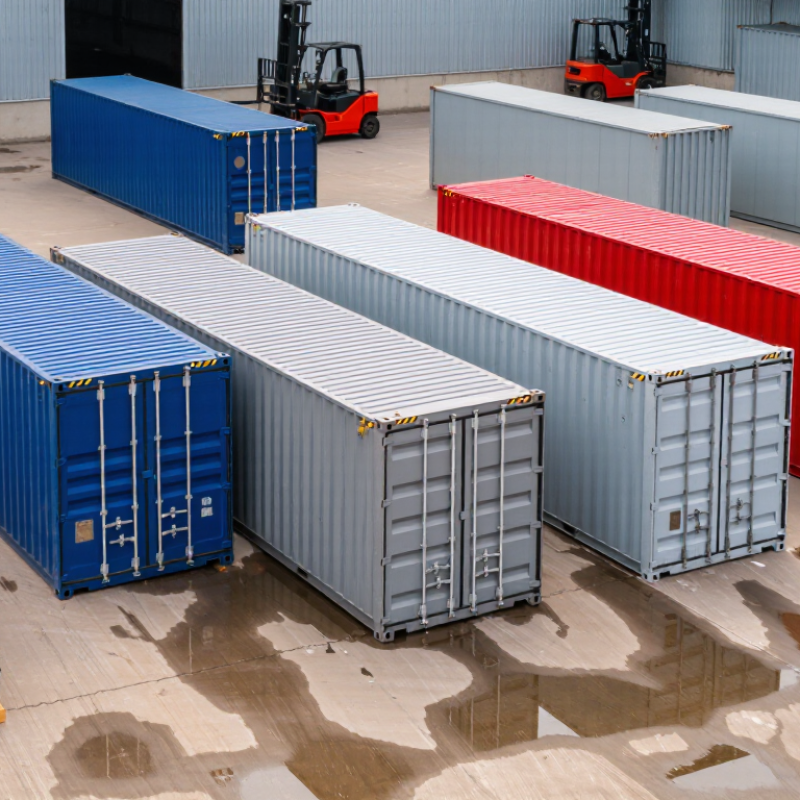
Steel storage containers are usually built from ISO 668 series 1 freight-container dimensions. The familiar 20-foot unit measures about 6.06 metres long. A 40-foot unit measures about 12.19 metres. Both are approximately 2.44 metres wide externally and 2.59 metres high in standard form.
These figures are nominal external dimensions. They are not guaranteed internal clearances. Wall panels, corner posts, roof framing, and door hardware reduce usable space. A steel floor may also sit above the supporting surface. Measure carefully.
For global buyers, checking ISO 668 compatibility is essential when selecting handling equipment, transport systems, or storage locations. Corner castings must align with compatible lifting and securing devices. Door openings deserve separate attention, especially for pallets, machinery, or long crates. A standard container is not always the best choice.
The site matters.
Condensation can form beneath a metal roof during cold mornings. Ventilation openings, raised foundations, and moisture-resistant packaging help protect stored goods. However, ventilation does not replace inspection. Water may enter through worn door seals or damaged roof areas.
Many buyers focus only on length and price. That is understandable, but incomplete. I would verify external dimensions, internal clearance, payload limits, floor condition, and local handling requirements before purchase. Manufacturing tolerances and repairs can change practical measurements. A specification sheet helps, though a physical inspection remains more reliable.
ISO 668 container sizes use a nominal external width of 2.44 m. Standard-height units are approximately 2.59 m high, while High Cube units are approximately 2.90 m high.
The chart compares nominal external dimensions in metres for widely used steel container configurations. Actual dimensions can vary slightly by manufacturer, corner fittings, doors, insulation, and local certification requirements.
7 Best Steel Storage Containers for Global Buyers
For global buyers, a 28–30 t payload is a demanding selection target. Do not judge capacity by external size alone. Check the container’s tare weight, maximum gross mass, and certified load distribution. A lighter structure may offer more usable payload, but it can reduce service life under repeated handling. That trade-off deserves careful review.
Corten steel is widely chosen for its weathering performance and strong resistance to atmospheric corrosion. It is not maintenance-free. Inspect welds, corner castings, door frames, and roof seams for rust scale or distortion. The container should also comply with CSC safety requirements when international transport is expected. ISO 1496 provides essential guidance for dimensions, strength, testing, and structural performance. Request current inspection records, test certificates, and clear identification plates. Photographs help, but they cannot replace physical inspection.
Tips: Ask for a payload calculation based on real tare weight. Confirm floor capacity and forklift-pocket ratings. Check whether local road and rail rules permit the planned gross mass. A 30 t payload may be technically possible, yet unavailable on some routes. This is where buying plans often become unrealistic. Also inspect internal height and door clearance. Bulky cargo can fit on paper but fail during loading. Selection is rarely perfect; a lower payload may be wiser if corrosion protection, documentation, or handling safety is uncertain.
For global buyers, the best steel storage container depends on access, height, cargo shape, and local weather. A standard dry container suits boxed goods, tools, and palletized materials. A high-cube model adds about 30 centimeters of internal height. That space helps with tall shelving and bulky equipment. However, confirm the internal dimensions before ordering. Manufacturing tolerances can affect usable clearance.
An open-top container works well for machinery loaded by crane. Its removable roof simplifies handling, but rain protection requires a fitted cover. A side-open model provides wide access along one wall. It is useful for long stock, retail displays, and frequent picking. A double-door container allows loading from both ends. This can reduce handling time in narrow yards. Flat-rack containers support oversized machinery, although they offer limited weather protection. Securing points must be checked carefully.
For temperature-sensitive goods, an insulated container provides better thermal stability than a basic steel unit. A refrigerated model offers active cooling, but it needs reliable electricity and regular servicing. I have seen buyers select cooling equipment without checking voltage compatibility. That mistake becomes expensive quickly. Inspect door seals, corner posts, floor condition, and corrosion before purchase. Request photographs of the roof and underside, not only the interior. My preferred model is not always the most advanced one. The right choice is the container that matches daily handling conditions.
For global buyers, the best steel storage container depends on cargo, access, and total landed cost.
A standard 20-foot container ranks highly for workshops, spare parts, and small export loads. Its nominal capacity is about 33 m³, but beams, doors, and pallets reduce usable space.
A standard 40-foot container suits bulky furniture and consolidated cargo. It offers roughly twice the floor length, but not always twice the value when freight rates rise.
For weather-sensitive goods, the 40-foot high-cube container provides extra height for stacked cartons.
The ventilated container fits agricultural tools and materials that need airflow.
An insulated model works for temperature-sensitive storage without replacing certified cold-chain equipment.
Open-top designs handle tall machinery, while side-opening containers improve access for long items.
These seven choices cover most commercial storage needs, though the ranking changes by site and cargo.
Used 20-foot units often cost about 1,500 to 4,000 US dollars before delivery. Newer units may reach 2,500 to 6,000 dollars.
Used 40-foot units commonly range from 2,500 to 6,500 dollars, while newer units can exceed 10,000 dollars.
Prices vary with steel condition, flooring, certification, inland transport, and port charges. Inspect door seals, corner posts, roof dents, and floor treatment before payment.
A 33 m³ container sounds generous. In practice, poor packing can waste a third of it. I would measure every pallet twice, because my first loading estimate is rarely perfect.
7 Best Steel Storage Containers for Global Buyers
For global buyers, the best steel storage containers begin with compliance, not appearance. Choose units with a clear CSC safety plate for international sea transport. The plate should show the container number, maximum gross weight, tare weight, and examination date. Check that markings remain readable. Missing details can delay loading. Seven attractive units are not useful if one fails inspection.
ISO 668 dimensions help buyers compare external length, width, and height. Common sizes include 20-foot and 40-foot units, but actual measurements can vary slightly. Confirm internal clearance, door openings, corner fittings, and floor capacity with the supplier. Small differences matter when equipment, pallets, or machinery must fit. Measure twice.
Customs approval is separate from CSC compliance. Prepare the commercial invoice, packing list, transport document, declared value, and correct tariff classification. Import duties, taxes, permits, and inspection procedures differ by destination. A local customs broker can verify current requirements before shipment. Also inspect seals, serial numbers, corrosion, repairs, and timber packaging rules. In practice, buyers often focus on steel thickness and overlook paperwork. I once underestimated that risk myself. Clearance is never guaranteed by a safety plate alone.
| Rank | Container Type | Best Use | ISO Nominal Size | Typical External Dimensions (L × W × H) |
Approx. Internal Dimensions (L × W × H) |
Approx. Volume | Typical Tare / Maximum Gross Mass | CSC and ISO 668 Compliance Check | Key Customs and Import Considerations |
|---|---|---|---|---|---|---|---|---|---|
| 1 | 20-foot General-Purpose Dry Container | General storage, machinery, tools, packaged goods, and international sea freight. | 1CC / 20 ft | 6,058 × 2,438 × 2,591 mm | Approximately 5,898 × 2,350 × 2,390 mm | Approximately 33.1 m³ | Typical tare: 2,200–2,400 kg Maximum gross mass: commonly up to 30,480 kg |
Confirm a valid CSC Safety Approval Plate for international ocean transport. Verify that the external dimensions and corner fittings conform to the applicable ISO 668 series requirements. | Usually classified as a steel freight container rather than ordinary cargo. Check the destination country’s rules for import duty, VAT, temporary admission, container deposits, and whether the unit will remain in the country permanently. |
| 2 | 40-foot General-Purpose Dry Container | Large-volume storage and consolidated cargo with standard-height loading requirements. | 1AA / 40 ft | 12,192 × 2,438 × 2,591 mm | Approximately 12,032 × 2,350 × 2,390 mm | Approximately 67.7 m³ | Typical tare: 3,700–4,000 kg Maximum gross mass: commonly up to 30,480 kg |
Check the CSC plate, next examination date, structural condition, door locking bars, floor rating, and corner fittings. Confirm the supplier’s stated dimensions against the relevant ISO 668 length and width requirements. | Import documentation normally includes a commercial invoice, packing list, transport document, and customs declaration. Duties and taxes may be based on the container’s transaction value and the importing country’s tariff classification rules. |
| 3 | 40-foot High-Cube Dry Container | High-volume storage, bulky goods, furniture, light industrial materials, and cargo requiring extra vertical clearance. | 1AAA / 40 ft High Cube | 12,192 × 2,438 × 2,896 mm | Approximately 12,032 × 2,350 × 2,695 mm | Approximately 76.3 m³ | Typical tare: 3,900–4,300 kg Maximum gross mass: commonly up to 30,480 kg |
Verify that the unit is specifically approved as a high-cube container and carries a legible CSC plate. Check the 2,896 mm external height because high-cube units may face road, rail, terminal, or warehouse clearance limits. | Confirm inland transport height restrictions, chassis compatibility, port acceptance, and any local permit requirements. Customs treatment is generally determined by the container’s material, condition, value, and intended permanent or temporary use. |
| 4 | 20-foot High-Cube Dry Container | Compact sites that need more usable headroom than a standard 20-foot unit. | 20 ft High Cube | Approximately 6,058 × 2,438 × 2,896 mm | Approximately 5,898 × 2,350 × 2,695 mm | Approximately 37.4 m³ | Typical tare: 2,400–2,700 kg Maximum gross mass: commonly up to 30,480 kg |
High-cube 20-foot units are not as universally available as standard 20-foot units. Confirm that the particular design has a valid CSC approval and is accepted by the intended shipping line, terminal, chassis, and inland carrier. | Check whether the importing country treats the unit as a standard freight container or as a prefabricated storage structure. Permanent placement may trigger building, zoning, electrical, or local tax requirements in addition to customs clearance. |
| 5 | 20-foot Open-Top Steel Container | Heavy, tall, or top-loaded cargo such as stone, scrap metal, industrial equipment, and machinery. | 20 ft Open Top | Approximately 6,058 × 2,438 × 2,591 mm | Approximately 5,898 × 2,350 × 2,350 mm, depending on roof and bow arrangement | Approximately 32–33 m³ | Typical tare: 2,300–2,700 kg Maximum gross mass: commonly up to 30,480 kg |
Confirm CSC approval for the specific unit, including the removable roof, tarpaulin system, door end, floor, lashing points, and corner fittings. The allowable payload can vary with the design and CSC rating. | Oversized or top-loaded cargo may require special declarations, permits, lifting instructions, and port handling arrangements. Cargo extending above the container may affect freight charges, customs inspection, and route clearance. |
| 6 | 40-foot Open-Top Steel Container | High-volume heavy cargo that must be loaded from above or through an end door. | 40 ft Open Top | Approximately 12,192 × 2,438 × 2,591 mm | Approximately 12,032 × 2,350 × 2,350 mm, depending on roof and bow arrangement | Approximately 65–67 m³ | Typical tare: 3,800–4,500 kg Maximum gross mass: commonly up to 30,480 kg |
Inspect the CSC plate and confirm the approved gross mass, roof configuration, door operation, lashing points, and structural condition. Do not assume that every open-top unit has the same permissible payload as a dry container. | Heavy or concentrated loads may require a verified load-distribution plan. Confirm customs inspection access, special handling charges, temporary admission rules, and any national requirements for securing exposed or oversized cargo. |
| 7 | 20-foot Side-Opening Steel Container | Storage locations requiring wide side access for pallets, long items, retail displays, workshops, or frequent loading. | 20 ft Side-Opening Variant | Approximately 6,058 × 2,438 × 2,591 mm | Approximately 5,898 × 2,350 × 2,390 mm; side-door opening varies by design | Approximately 31–33 m³ | Typical tare: 2,600–3,200 kg Maximum gross mass: commonly up to 30,480 kg, subject to the approved design |
Side-opening configurations are design-specific. Confirm CSC approval for the complete structure, including side doors, hinges, locking gear, posts, floor, and corner fittings. Check that the certification covers the actual modified unit. | Structural modifications can affect customs classification, transport acceptance, and insurance. Obtain technical drawings, the serial-number-matched CSC plate, commercial documents, and any required import permits before shipment. |
A 20-foot unit usually fits workshops, spare parts, and smaller shipments. Its nominal capacity is about 33 cubic meters. Beams and pallets reduce usable space. Measure every pallet twice.
A 40-foot unit suits bulky furniture and consolidated cargo. It offers roughly twice the floor length. However, higher freight rates can reduce its value. Bigger is not always cheaper.
A high-cube unit provides extra height for stacked cartons. It helps when floor space is limited. Check door height and internal clearance before loading.
A ventilated container suits agricultural tools and airflow-sensitive materials. It reduces stagnant air inside the unit. Ventilation does not replace proper moisture control.
Used 20-foot units often cost 1,500 to 4,000 US dollars before delivery. Newer 20-foot units may reach 6,000 dollars. Used 40-foot units commonly cost 2,500 to 6,500 dollars. Newer 40-foot units can exceed 10,000 dollars. Delivery and port charges may change the final price sharply.
Inspect door seals, corner posts, roof dents, and floor treatment. Also check corrosion, repairs, serial numbers, and locking parts. A cheap unit can become expensive. Do not trust fresh paint alone.
Check the clear safety plate for container identification and weight limits. It should show maximum gross weight, tare weight, and examination date. Markings must remain readable. A missing detail may delay loading.
No. Safety compliance and customs approval are separate matters. Prepare the invoice, packing list, transport document, and declared value. Confirm tariff classification, duties, taxes, permits, and inspections locally. Timber packaging may require additional treatment or documentation. I once underestimated paperwork risk myself.
This guide explains how to choose the right Steel Storage Container for international storage, transport, and industrial use. It begins with the fundamentals of ISO 668 sizing, including the approximate 2.44 m external width and 2.59 m height of standard units. Buyers can compare typical 20-foot and 40-foot formats, payload ranges of about 28–30 tonnes, weather-resistant Corten steel construction, and capacities reaching approximately 33 m³, depending on the model and configuration.
Seven practical designs are reviewed, including standard, high-cube, open-top, side-open, and other specialized options. Each model is ranked according to accessibility, loading requirements, available space, operating cost, and suitability for different applications. The guide also highlights essential compliance checks, such as a valid CSC plate, ISO 1496 performance requirements, accurate ISO 668 dimensions, and destination-country customs procedures. By combining technical specifications, lifecycle costs, and regulatory considerations, global buyers can select a safe, durable, and cost-effective container with greater confidence.

Jinhui Storage Equipment